

The Identity Paradox: Reflections on AI from the boardroom and from the back of a taxi
A ChangeMakers roundtable on non-human identities and AI governance, and a taxi ride home that put the same question in miniature: can the systems we trust actually be trusted with what matters most?
Privileged and invigorated to have been part of lively debate this week, on the very topical thread of non-human identities, now proliferating across organisations as a consequence of the AI adoption surge. By 2027 it is predicted that 74% of organisations will be using AI Agents (Deloitte study, 2026).
The event was a #ChangeMakers round table on ‘The Security Shift’ that is consequently underway, as non-human identities proliferate at pace. The discussions progressed through the AI adoption curve, governance considerations, practical challenges and looking to ensure cross-org alignment, whilst the pace of change is more rapid than the process, procedures and guardrails that follow in its wake. I offered a point about the conundrum proposed by the ‘Identity Paradox’, whereby organisations experience intense downward exec pressure to implement AI at pace; but the balancing capabilities in controls and checks and balances are often stretched to keep up.
The quality of discussion in the room was excellent and perfectly on point for this critical topic - bringing together tech leaders operating where bleeding edge Identity, AI and Security intersect.
With AI now being such a pervasive element of modern life, it was perhaps not a surprise that even the taxi ride home was ‘on topic’. Travelling back in a cab from Guildford station, I found myself in conversation with the driver, who was telling me his own AI story and the impact it had on the lives of both him and his family, particularly for his daughter, who was experiencing learning difficulties. Utilising AI to research and uncover local authority and other support resources, he relayed how AI was an accelerating force in helping him navigate the hugely complex routes to securing help for his daughter, via untangling a web of complex processes.
That's the identity paradox in miniature. In the room, we debated how to govern non-human identities before they outpace our controls. In the cab home, AI was already, quietly, helping a father navigate a system built for humans, on behalf of a daughter who needed it most. Two very different rooms. The same question: can the systems we trust actually be trusted with what matters most to us?

AI and Identity discussions in the room



Scoring with your very first touch of the season feels great. But the scoreboard only tells a fraction of the story..
A hockey team's first match of the season and a memorable win reveal three lessons that translate directly into product and portfolio leadership: shared mission, invisible teamwork, and the discipline of fast, effective decisions under pressure.
New Season, new pitch (a glorious freshly-laid astro) blazing September sunshine – the perfect setting. The perfect stage for the start of our Fleet & Ewshot hockey team’s new campaign last Saturday. New season, but the same rules in play. It was about the team, and the unifying mission that is the beating heart of any successful group.
Our team picked up from where we left off last season, in our first encounter against a formidable Alton side. Cohesive, looking for the gaps, the hidden opportunities and the best routes through a tight opposition defence. I was fortunate to score with my first touch of the match (and therefore of the season) to net our first goal, in a memorable 3-0 win over our local rivals. At the other end of the pitch, our debutant Goalkeeper made an improbable penalty save – something rarely seen in game of hockey. But it’s never just about the team member who applies the final touch. A team wins or loses based on the cumulative effects of everyone who shows up, whether that’s on the hockey pitch or at the product management or portfolio coalface.
> A shared mission – one common overarching goal:
Pulling together as one for compounding effects requires clarity of purpose and shared endeavour behind a unified mission. On the pitch, it’s about how do we score more goals than we concede. In product and portfolio teams, there needs to be a ‘higher purpose’ for a work group to rally behind in pursuit of excellence. Whether that is about creating a secure but frictionless experience for users logging into a platform to start the user journey or about building out a holistic ‘suite of solutions’ all in one convenient place (think Revolut), the defining purpose shapes the way for the ‘how’ teams best come together as one.
> Invisible Teamwork:
The best teams bring a blend of the talents, and a way of working that creates a magical multiplier effect which is much more than the sum of its individual parts. In a game of hockey, the striker applying the final touch for the goal is the cumulation of the building work of the defence and midfield behind them. Great product teams are no different, the amalgamation of well-grounded customer understanding to help shape a clearly defined and balanced solution path combined with the engineering excellence to help deliver the ultimate realisation of that solution. The cohesive collaboration behind the common purpose brings the value.
> Instant interaction:
Just as in hard-fought hockey games, so too in fast-paced B2C retail or fintech markets – often decisions need to be made quickly, but still effectively, in the moment. A hockey team coming back from the summer break for their first game back together doesn’t have the luxury of time to discuss in advance each permutation the game might take. It has to improvise and then iterate. So too with cross functional product teams assembling to address the latest business critical problem to be solved: initial insight > interact > iterate > invigorate is often a well-advised model to either build momentum early, or fail fast in pursuit of other better bets.
The executive takeway:
Whether you’re battling on the hockey pitch for each hard-won goal (or goal prevented) or leading product teams into complex cross functional digital transformation to replace a creaking legacy platform, the same rules ring true. Success isn’t an individual sport within a team construct; it’s about the power of the team to create accelerating multiplier effects in unison that help deliver the final result. As one, cohesive and mission-aligned unit.



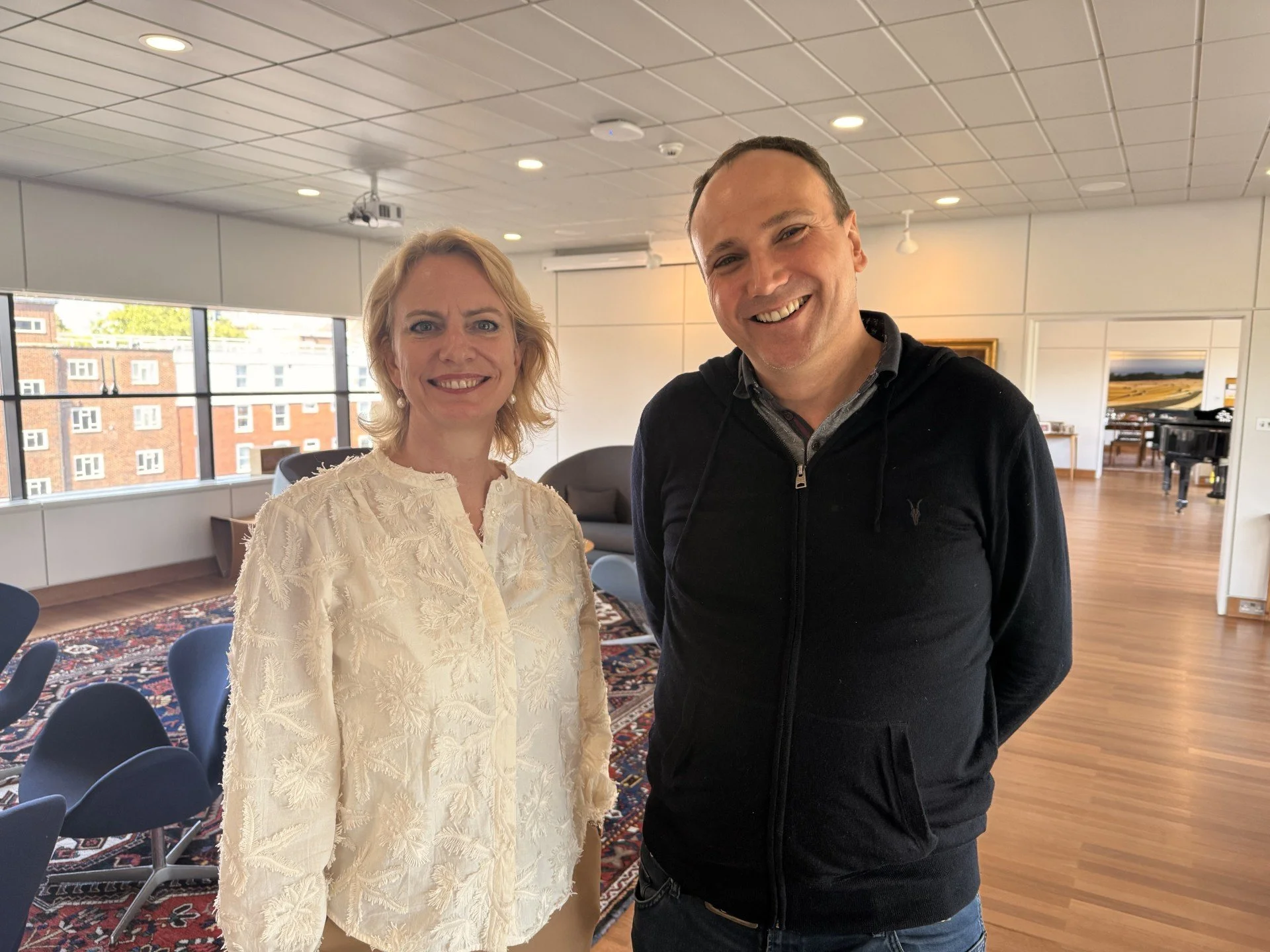
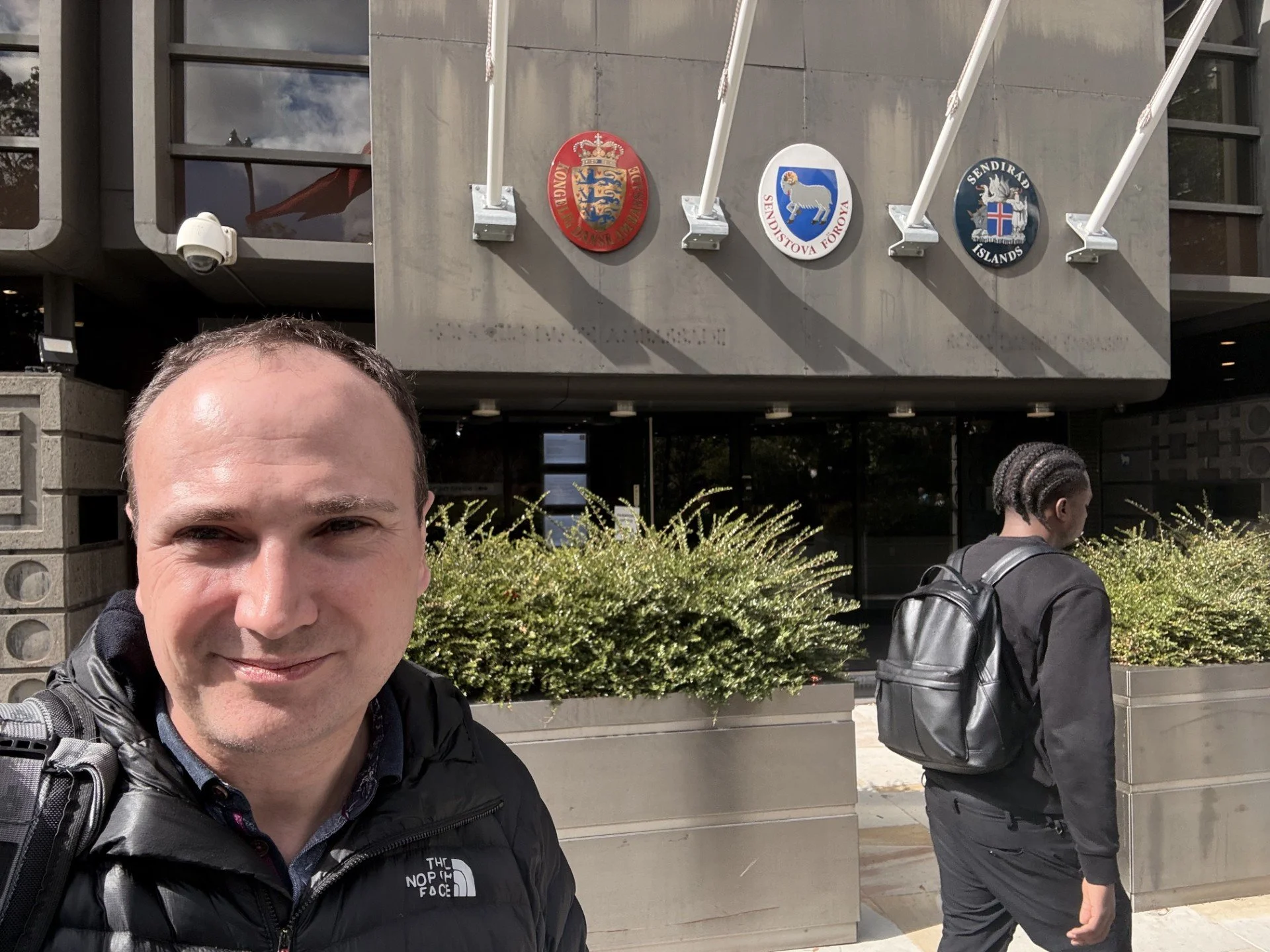
Data Sovereignty, Resilience, and a Danish Pastry: Reflections from a Morning at the Embassy
Earlier this week I had the privilege of joining a Technology Leaders Breakfast at the Danish Embassy in London, hosted by Ambassador Kristina Miskowiak Beckvard and the team at Denmark in the UK, on data sovereignty in a cloud and AI-first age.
The room was genuinely exceptional: CIOs, CISOs, and senior technology leaders from across sectors and government, all wrestling with the same tension I see daily in identity and platform work. How do you build systems resilient enough to withstand real disruption, whilst keeping trust and sovereignty intact for the people who depend on them?
It's a tension that doesn't resolve itself with a single framework or a single vendor. Data sovereignty sits at the intersection of technical architecture, national policy, and commercial pragmatism, and the organisations that navigate it well tend to be the ones who treat all three as inseparable, rather than solving the technical problem in isolation and hoping policy and commercial reality catch up later. That's true whether you're a retailer managing customer identity across markets, or a government department managing citizen data across borders, the underlying discipline is the same: resilience isn't a feature you bolt on, it's a property of how the whole system, technical and institutional, is designed from the outset.
The event also brought back fond memories for me of my time building out globalised technology solutions, across 110 countries, to support international trade for the UK government a few years ago, in the post-Brexit phase. That work taught me a version of the same lesson from a very different vantage point: platforms that need to serve multiple sovereign jurisdictions at once can't treat "compliance" as a downstream concern. It has to be architected in from day one, or it becomes the thing that quietly breaks under real-world pressure, exactly when you can least afford it to.
It was genuinely great to see states and business converging so seamlessly to discuss pivotal shared concerns like this one. Too often these conversations happen in separate rooms, technologists talking to technologists, policymakers talking to policymakers, when the actual problem sits squarely in the overlap between them.
And yes, discussions were well-fuelled by the obligatory and freshly-baked Danish pastries, which were, without question, the best I've ever tasted.
Grateful for the invitation, the warm hospitality, and the calibre of thinking in that room. Conversations like these are exactly why I believe identity, trust, and resilience belong at the same table as commercial strategy, not somewhere further down the agenda, or in a different room entirely.




Why Product Leaders Should Stay Current in Marketing, Not Just Technology
A CIM CPD renewal is easy to file under housekeeping. Ian Finn argues it's actually a case for something rarely said aloud: staying current in marketing discipline isn't a detour from product leadership, it's foundational to doing it well.
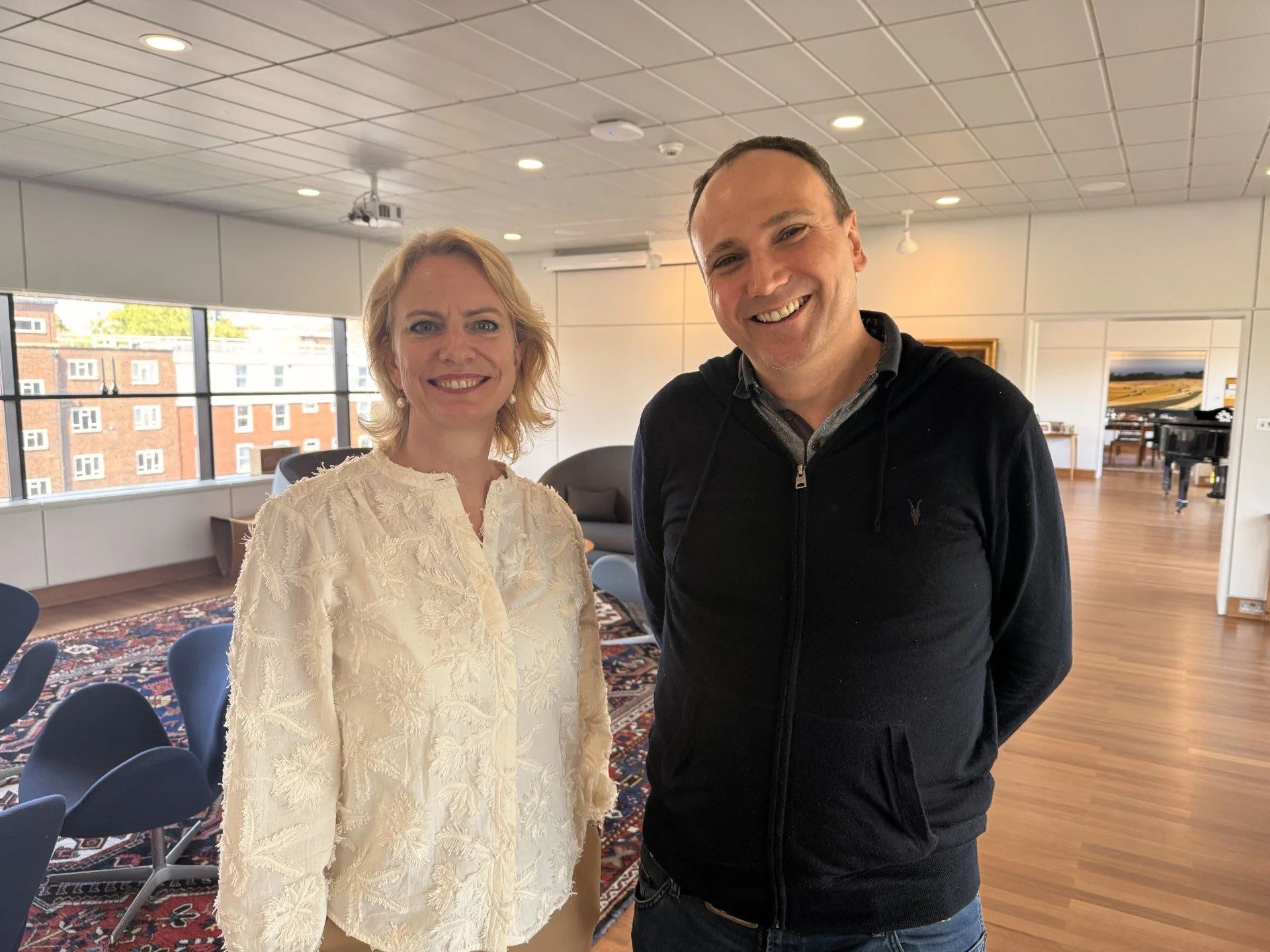
I renewed my Chartered Marketer status with CIM this week. My CPD for the year has been assessed and approved, and CFCIM stands confirmed for another twelve months.
It would be easy to file that under housekeeping. I think it's worth more than that.
There's a common assumption that product leadership and marketing discipline are adjacent but separate: one builds the right thing, the other tells people it exists. In my experience that's a false separation. The best product decisions I've made have drawn on marketing fundamentals as much as technical ones.
Personalisation isn't just a feature to ship. It's a discipline built on genuinely understanding audience segments, how their needs and wants differ, not just having the data infrastructure to act on them. Segmentation thinking, knowing precisely who you're building for and why each cohort differs from the next, shapes better roadmap prioritisation than usage analytics alone ever will. And audience understanding, the ability to read what a customer actually needs rather than what they say they want, is a marketing instinct I've relied on as often as any product framework.
Staying current in these disciplines, through CPD, through active practice, and simply by not letting the fundamentals atrophy, has made me a more effective product leader, not a distracted one. The two disciplines were never as separate as they're often treated.
Grateful to CIM for the annual discipline of reflection this renewal requires. It's a genuinely useful exercise: an honest account of a year's learning, rather than letting it pass unexamined. It's also a habit worth recommending to any product leader who assumes marketing rigour is someone else's job. The ability to segment audiences, target them with personalised propositions, and build a coherent go-to-market strategy is fundamental to doing product well.

The CIM’s CFCIM professional badge
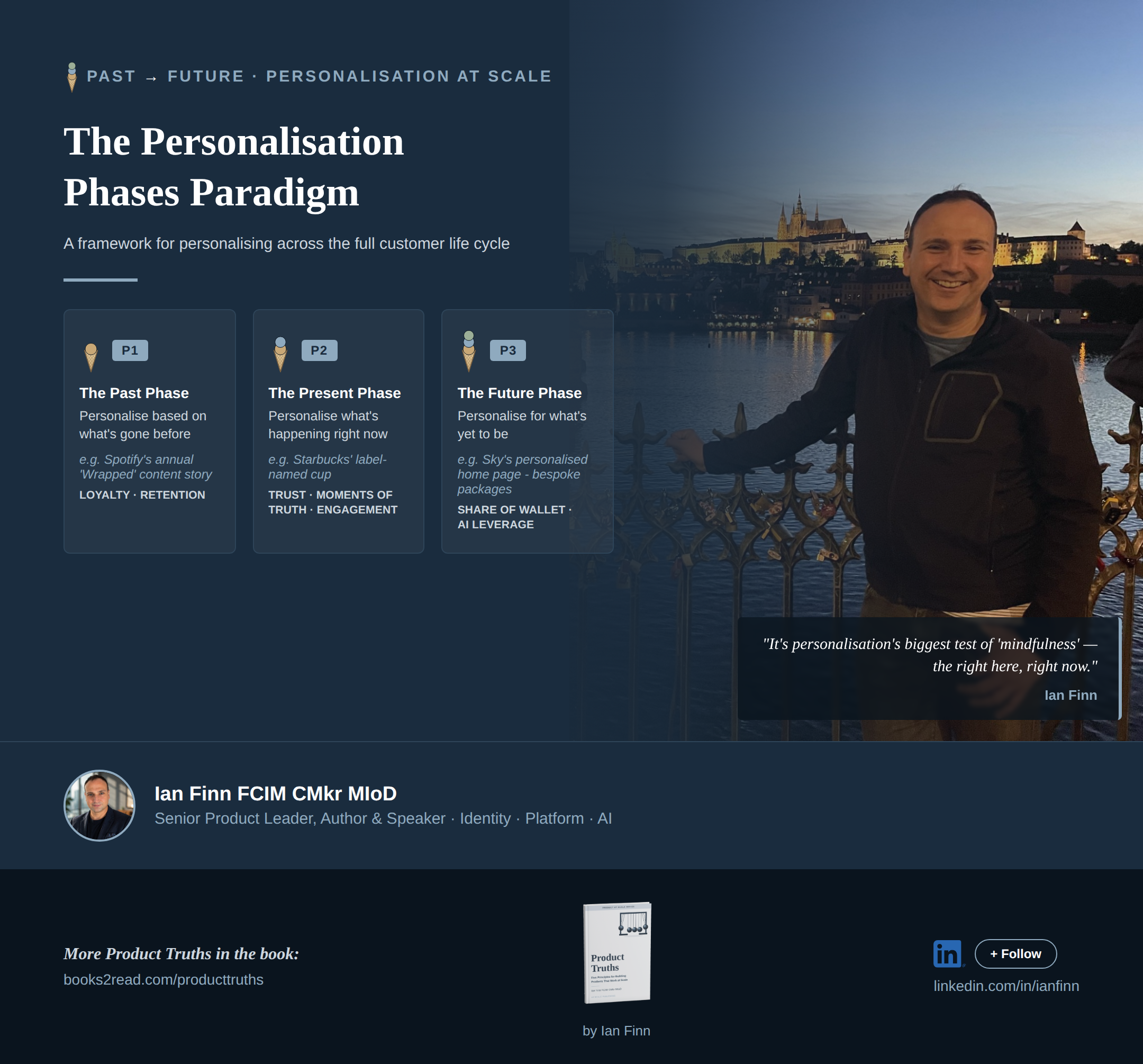
The 'Personalisation Phases Paradigm': A Framework for Personalising at Scale
Most brands treat personalisation as one thing. It's actually three, past, present, and future, each with its own data, its own tactics, and its own payoff. Here's the framework.
-Ian Finn on Personalisation-
Personalisation is the modern day elixir. The ability for services, preferences, recommendations, gamification, and loyalty to all be tailored and individualised for the specific customer being targeted. It's the ultimate in one-to-one marketing meeting relevant experience: targeting bigger basket sizes, and supporting "retention via relevance" across the customer life cycle, all at the same time. Personalisation strategies are proven to move the needle; industry research consistently links strong personalisation to measurable gains in conversion and retention. And consumers desire such personalised experiences too: a global survey in 2024 of 23,000 consumers by BCG found that 80% of them were comfortable with personalised experiences, with most of them expecting brands to offer them.
All worthy outcomes for brands at scale to target. But how can brands truly succeed in a marketing-meets-tech discipline where, by its very nature, success hinges on cutting through the wider noise?
A framework I have developed and found to work well across sectors is to base both the inputs and outputs of a personalisation strategy on key "phases" of the customer life cycle itself, the very chain of events, and phases of data availability, that provide the fuel for a personalised strategy in the first place.
The key starting premise is segmenting the customer life cycle into three "phase views," which provide the inputs for the personalisation tactics to play out. It's an approach I call the Personalisation Phases Paradigm. Let's break it down.
To succeed in personalisation, we know it's all about being relevant, in the moment, on as individualised a basis as possible, often in as close to real time as possible. This is where the Personalisation Phases Paradigm comes into its own, because it's naturally defined by time.
The Personalisation Phases Paradigm in practice
1. Personalisation Phase P1 (the past): Personalise based on what's gone before
This phase leverages the most reliable and most available data and modelling of all, because it's about things that have already happened. That gives it the added benefit of being the phase with the highest potential for accuracy.
It's about taking what we know of an individual and applying a next best action, based on our read and interpretation of the past, to drive an outcome of value.
Examples here would include personalising based on past consumption, like Spotify's annual "Wrapped" in-app carousel, telling a one-of-a-kind story about a user's year of content consumption, or a brand's mobile app summarising which retailers or brands loyalty points were earned with.
Great for: loyalty and retention plays, brand engagement, deepening consumer interest.
2. Personalisation Phase P2 (the present): Personalise based on what's happening right now, in the moments of truth
This phase is about being as relevant and tailored to the current moment of interaction as possible. It's personalisation's biggest test of mindfulness, because it's about the right here, right now. Data systems, timeliness, and how systems interconnect and hold current-state awareness all have to be genuinely on point.
Examples of this one would include the Starbucks coffee that arrives at the end of the counter with your name already on the cup, without you needing to say "my name's Max," because it's been pre-printed from a scan of your loyalty app while paying. Another would be an ecommerce basket's "additions" recommendations, which dynamically adapt cross-sell nudges by modelling likely customer thinking as items are added or removed in real time.
Great for: brand engagement, moments of truth, building trust and deepening customer relationships, cross-sell and upsell.
3. Personalisation Phase P3 (the future): Personalise based on what's yet to be
This phase is about personalising for potential outcomes that the personalisation itself helps bring about. These tactics include overlaying algorithms or "propensity models" onto historic, verified data, to influence and change behaviours. It's about blending measured data points from the past with likely future scenarios, and leveraging both together for competitive advantage.
Because this phase relies most intensely on data leverage, signalling, propensity rules, and orchestrating touches by cohort, it's also the phase that can most usefully harness AI as a genuine force multiplier.
Examples here would include a personalised home page on a Sky TV web account, suggesting a more suitable subscription package for the household, or a tailored "next best action" nudge in a digital banking app, suggesting a switch away from paper statements when blended with data on which customer cohorts feel strongly about environmental issues.
Great for: building and growing transaction volumes and value, increasing share of wallet, and influencing customer behaviour in mutually beneficial ways.
So there you have it. A framework for personalisation across the phases of the customer life cycle, leveraging data, models, and AI progressively as more data points become available over time. I've found it highly useful in building personalisation strategies across a range of industry sectors.
Personalisation succeeds best when context, data, tools, AI, identified need, and trust all intersect. The Personalisation Phases Paradigm provides a framework to succeed at that, at scale.
> Searching for more ways to compound the benefits in your product? More in the book, ‘Product Truths: Five Principles for Building Products That Work at Scale’. Available at all major digital bookstores (Amazon Kindle, Kobo, Apple Books):
www.Books2read.com/producttruths
Insight referenced in article - BCG 2024 consumer study into personalisation preferences:
https://www.bcg.com/publications/2024/what-consumers-want-from-personalization
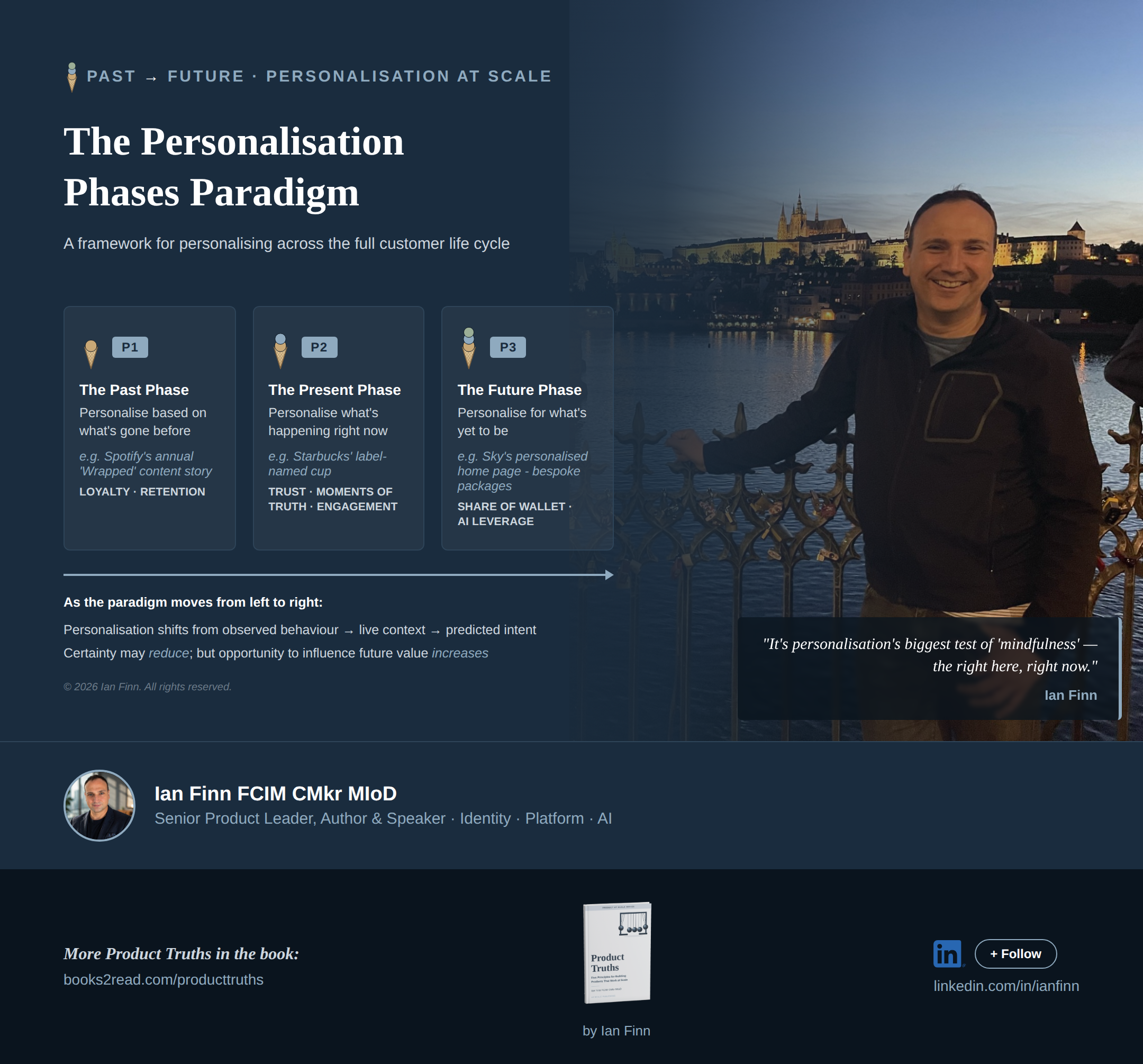
The ‘Personalisation Phases Paradigm’ 2026 Ian Finn. All rights reserved.
If compound interest is the 'eighth wonder' of the world, what's the ninth?
Compounding. The art of creating accruing benefits of stability, performance, resilience and impact, because your product or system simply shows up more of the time, falls over less, and bounces back quicker and more gracefully when it does fail.
- Ian Finn on Resilience -
I've always loved the idea of compound interest. Once capital is invested, even just by sitting there, value accrues by what's often called 'the eighth wonder of the world': he who understands it, earns it; he who doesn't, pays it.
It's actually very similar in product management, where there's a fundamental, under-leveraged truth, one often overlooked under the weight of 'busy work' or building the latest feature, yet arguably the one that delivers the greatest benefit of all. Compounding. The art of creating accruing benefits of stability, performance, resilience and impact, because your product or system simply shows up more of the time, falls over less, and bounces back quicker and more gracefully when it does fail. That's compounding, right there.
So how do we 'compound', and realise these benefits for the products we lead? Like many things in product, it can flow from a framework, and a framework can provide the scaffolding your product needs to win in an ever more complex and morphing world. Let's compound.
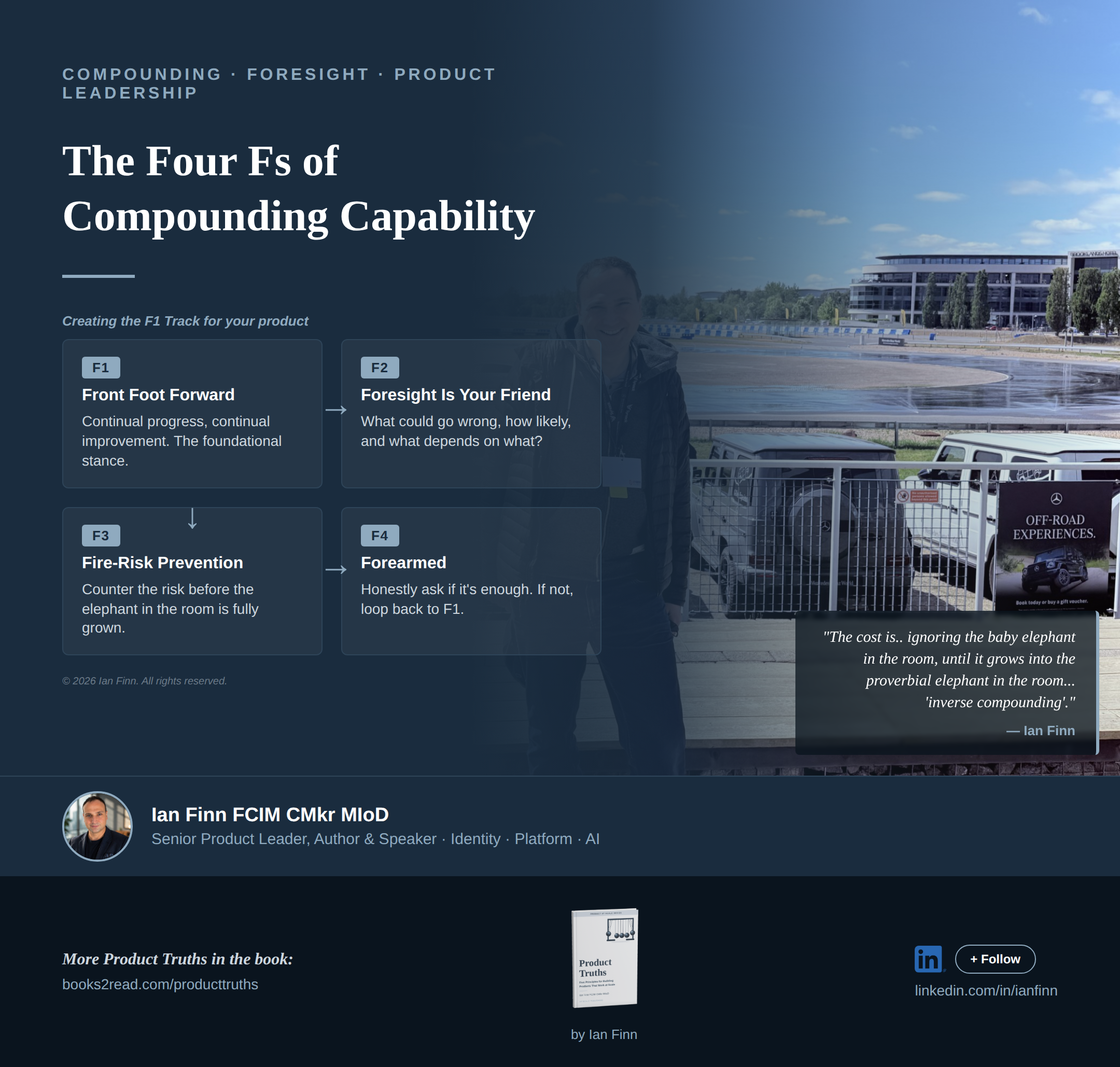
The framework I've developed in this area, applied to products I've led across four different sectors, is one I call the Four Fs.
I built this framework from watching priorities in product default to the 'highest profile thing', the 'noisiest thing', or the 'flavour of the moment'. All of this creates its own noise, and distorts what a product is primarily set up to do. (Bonus tip: leaning into your Product Vision in such moments is never a bad idea either, or even stress-testing it to check it still holds true). The cost is ignoring the baby elephant in the room, until it grows into the proverbial elephant in the room. I call that ‘inverse compounding’.
1. Front Foot Forward
I've always liked Covey's maxim, 'start with the end in mind'. This F is similar, but different. It's the foundational F, and it asks for acceptance of two continuums: continual progress, and continual improvement. That's the very definition of compounding in product, moving forward deliberately rather than reactively, before the next fire forces your hand.
Once a team accepts and aligns with that principle, the art becomes unlocking the compounding benefit. That's where the other three Fs come in.
2. Foresight Is Your Friend
This one's about thinking ahead, before you need to, or before events force you to. It's about being the devil's advocate to your own product's set-up, build and architecture, or getting others to play that role for you, if necessary.
What you're trying to baseline are three things: what could go wrong, how likely is each thing to go wrong, and what other dependencies and wider considerations affect your product performing well under pressure, peak load, unexpected events, macro factors, or attacks and threats from outside.
Use these to baseline what comes next.
3. Fire-Risk Prevention
This is the one I've seen too often overlooked, yet it's often the biggest opportunity in products at scale. The dedication and precision to take what's found in Foresight and counter those risks accordingly, so the ‘elephant’ never fully grows in the first place. Modernisation, patching, refactoring, all components of this F. But so too are more nuanced plays: test and learn rather than fail and burn, and genuinely mapping your true dependencies, have you really mapped every endpoint?
This is the richest opportunity in the Four Fs, and it sets the stage for the final one.
4. Forearmed
We all like to sleep at night, don't we? Product leaders, engineering leaders, teams building and running products, or supporting them in live.
Forearmed is more than the sum of the other three Fs, it's the defining principle. It's taking what they've developed and asking, honestly: does this range of optimisations, enhancements and preventative plays really give our users the most performant, reliable product we can provide? Or does it still fall short? If it falls short, return to the first F and work forward again. Your users, your business, and general karma will thank you for it.
Four Fs, four principles, four ways to build products for tomorrow, not just today. That's the ninth wonder: not compound interest, but compounding capability, deliberately built, ‘F by F’.
>So what's your take? How do you apply foresight and forearmed thinking to your own products? And what's the cost of not acting, if you don't?
> Searching for more ways to compound the benefits in your product? More in the book, ‘Product Truths: Five Principles for Building Products That Work at Scale’. Available at all major digital bookstores (Amazon Kindle, Kobo, Apple Books):
www.Books2read.com/producttruths
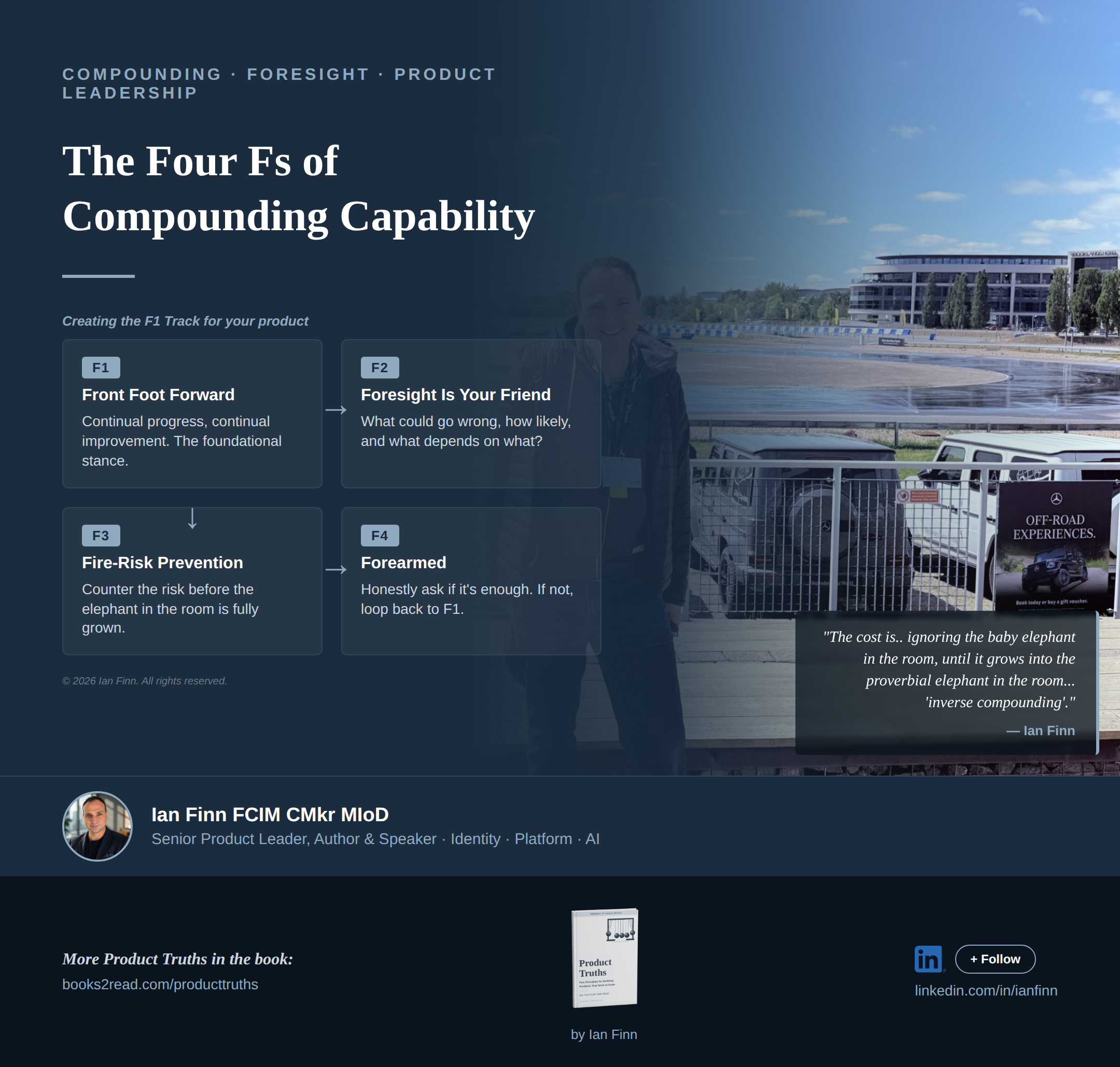
The Four Fs of compounding products. 2026 Ian Finn. All rights reserved
Your next incident won't define your system's fortunes. Your work before the storm will
Your next incident won't define your system's fortunes, your work before the storm will. Introducing the Three Ps: a framework for engineering resilience at scale.
- Ian Finn on Resilience -
One question I'm often asked: 'how do we create performant and resilient systems, at scale?' It is a sound question to ask.
But behind this query, there often sits an uncomfortable truth. Many large-scale systems morph and iterate over time, often without embedding the 'preventative and performative' elements that ensure high levels of service quality, availability and experience for the end user. This is a material risk to large-scale systems today, and systems at scale can literally live or die by it.
So important, then, that the 'real world readiness' of the system to react, adapt and bounce back at scale is built into its very core, by design.
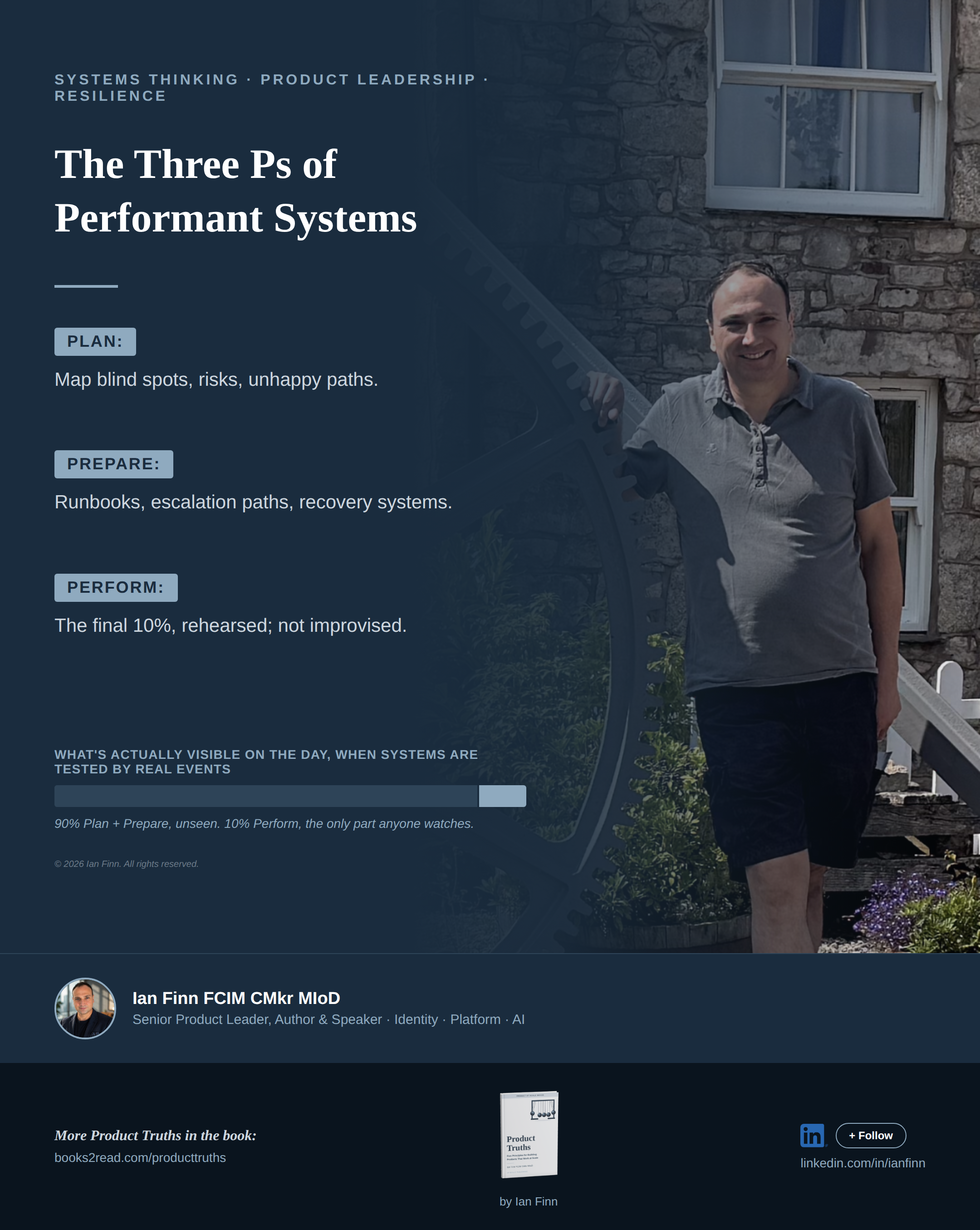
This is why I developed the 'Three Ps' Framework, for performant systems. It's the set of guardrails and 'silent scaffolding' I apply to my products at scale, to not only ensure high levels of performance and 'non-functional' robustness when the system is live and running, but also to power its recovery and bounce-back when it goes down. All systems experience such moments, at some point or other. Best, then, to be prepared. Enter the Three Ps.
The Three Ps of Performant Systems
Plan: map out blind spots, the risk areas, the unhappy paths, and run through the key 'What If?' scenarios, to stress test your system in advance. This 'P' serves a cunning twin purpose: it helps prevent many problems from hitting the system in the first place, whilst also providing the fuel for a further 'P' to be built and readied in advance: Prepare.
Prepare: for the worst, whilst always hoping for the best (the worst will often happen anyway, so best to be ready). Your disaster management and recovery systems, your runbooks, incident and escalation paths that need to play out in real time, need to be stress tested whilst the sun is shining, not once the storm itself arrives. They need to be documented, and easily accessible too, ready for those moments of truth when they hit.
Perform: the final 10% of how you act in the moments of crisis, or when the system is tested. Even this can be dry run or rehearsed (part of 'Prepare'), to build the crisis management muscles before they're ever even needed. It's like how fire crews don't just sit idle waiting to attend the next fire or incident, they train, they rehearse, they develop new smarts to counter emerging threats. So too with resilient systems at scale. The 90% readiness comes from the first two Ps; the remaining 10% comes from how your team performs in those moments of truth.
Over to you: how do you engineer your systems at scale to be highly performant in the 'usual' times, but able to react and recover when the system is under real world stress?
>More Product Truths in the book, 'Product Truths: Five Principles for Building Products That Work at Scale'. Available at all major digital bookstores (Amazon Kindle, Kobo, Apple Books): https://books2read.com/producttruths.
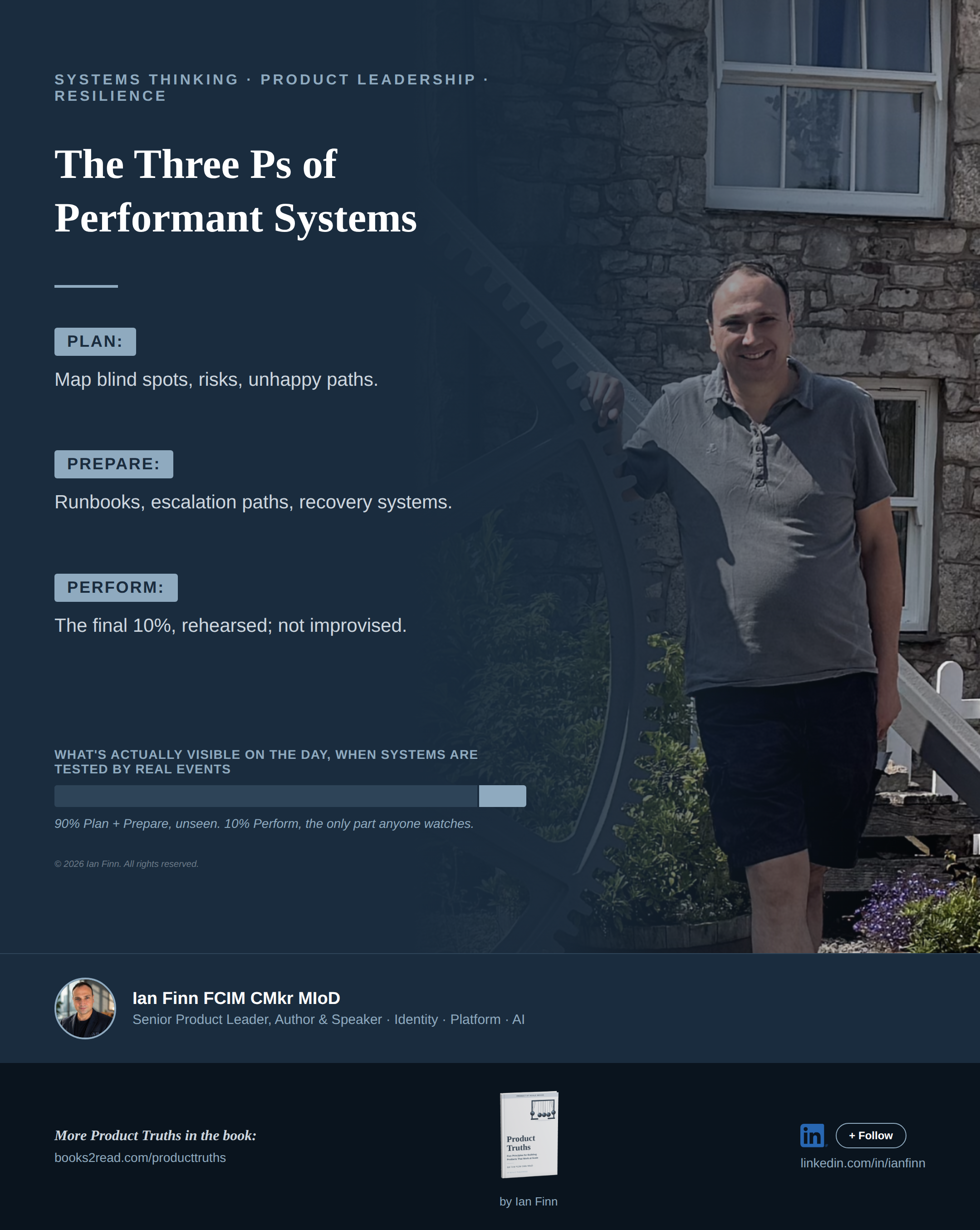
The Three Ps of Performant Systems: Copyright Ian Finn, 2026
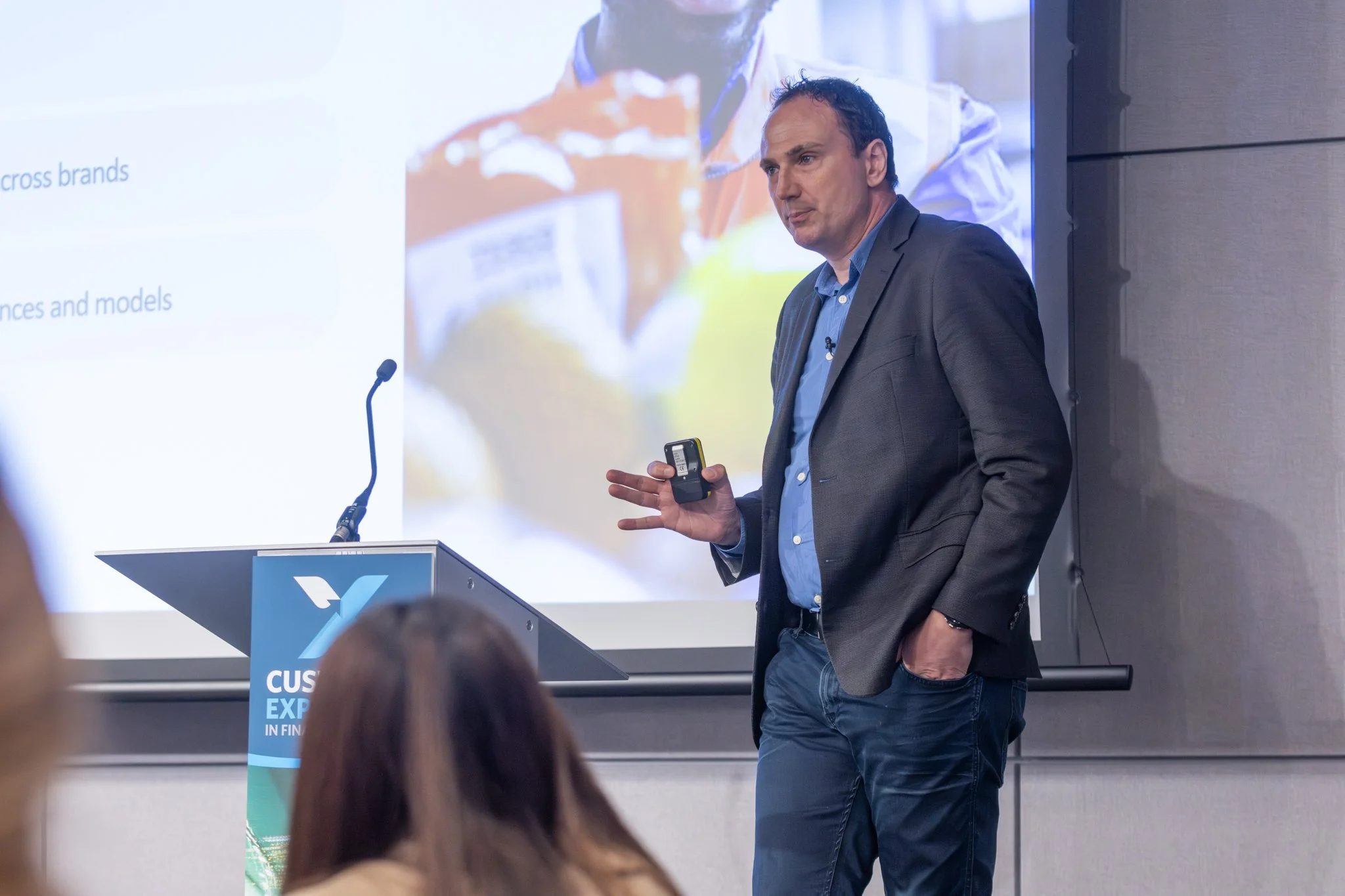
Can We Build It? Wrong Question.
Ian Finn talking about AI-powered personalisation, at Customer Experience in Financial Services 2026.
Two days at CXFS26. One thing stuck with everyone who spoke there: the conversation has genuinely shifted — from "can we build this" to "can our customers actually trust it?"
Arena International have just released their official highlight reel from Customer Experience in Financial Services 2026 — a good snapshot of where senior leaders in the sector are actually spending their attention right now: AI and the invisible infrastructure customers never see but always feel.
My contributions are in there — on personalisation in the age of AI, and my reflections on the show as a whole.
What's your take on where AI-powered personalisation is headed in the next 5 years?
⬇️ Watch the full video here →https://www.youtube.com/watch?v=zQok5QQ3bps&t=73s ⬇️

No one photographs the planning. Only the peak.
Ian Finn on top of Irton Pike, Cumbria, July 2026
Setting out on a day's hike last week in Cumbria with my great friend @DavidPull – the preparation was extensive and wide-ranging. Before we even set foot on the trail, there was more planning than most people would ever realise. New walking boots, spare laces, a pre-chilled bottle of water for the forecast heat, a fully charged phone and battery pack.
Summiting the peak is just the final, visible part. The part that makes the memorable photo, the soundbite or the outcome summary.
What no one sees is the journey before the ascent: the compounding experience of previous hikes, checking local weather conditions in advance, the specific kit choices for the day – even who you choose to climb with.
That same invisible preparation is what separates robust, resilient systems from fragile ones. The great systems – the ones that scale seamlessly and bounce back quickly when tested – are the product of stress-testing every angle in advance: informed trade-offs, fall-backs ready to deploy, contingent processes that kick in at exactly the right moment, and the right people on the team. That's what lets a team react gracefully under pressure – an incident, an unexpected outage, a system taking an unexpected turn – rather than scrambling in the moment.
The best, and safest, hill climbs don't just 'happen'. The planning, preparation and forethought account for most of the outcome long before the summit comes into view. Systems at scale are no different – the day-to-day micro-actions of optimising frameworks, honing documentation, and keeping run books slick and ready for the worst. That's no accident either; it's by design.
The next time you see a clean outcome — a summit photo, a smooth incident response, a system that just works — remember you're only seeing the final 10%.
 + Plus Perspectives
Whether it's climbing a mountain or operating a complex system at scale, the steps to success are similar:

Photo: me on top of Irton Pike, near Stanton Bridge, Cumbria, July 2026

Photo: Irton Pike, Cumbria - panoramic view, July 2026

Not every retail obituary is permanent
Not every high street brand that disappears is gone forever. Some endure — and even bounce back from apparent oblivion — and deserve to.
One such retailer is Joules —known for colourful British country clothing, eye-catching polo shirts, divine dresses and wonderful welly alternatives to Barbour and Hunter.
Rescued by Next in 2022 from what appeared to be the end of the brand, it's a continuing joy for me to see their brightly coloured shops adorning selected high streets — and they're not just surviving. Reports this year point to Joules being on track for its first profit since 2022, alongside a fresh UK and Ireland store expansion drive.
Not every retail brand can weather prolonged economic headwinds. Not all make it — think Debenhams, Wilko and others in recent times. Under these conditions, it's always a heart-warming feeling when one of our favourite brands survives — or in this case, resurfaces and rebuilds. Like the need for resilience in retail technology systems, so too there is the need for strategic, brand-level resilience as tastes, economics and trading headwinds morph and change. Bouncing back with new stores, and returning profits, is the commercial equivalent of resilience in action. Technology resilience is often measured by uptime and recovery. Brand resilience is measured by something much harder to accomplish — whether customers care enough to come back.
I happily did my small bit — and picked up two eye-catching polo shirts while passing through Ambleside. Supporting brands we genuinely value is one of the simplest ways we can help write their next chapter.
It's a useful reminder that resilience isn't just a technology capability. It's a commercial one too.
Which high street brand are you most pleased to see survive—or wish had survived?
📓 If brand-level resilience is a topic that interests you, I dig into it (as well as four other principles) in my book, Product Truths — books2read.com/productruths



Photos: author's own — the Joules store in Ambleside, Cumbria
‘Product Truths’: My First Review
- Ian Finn on Product Leadership-
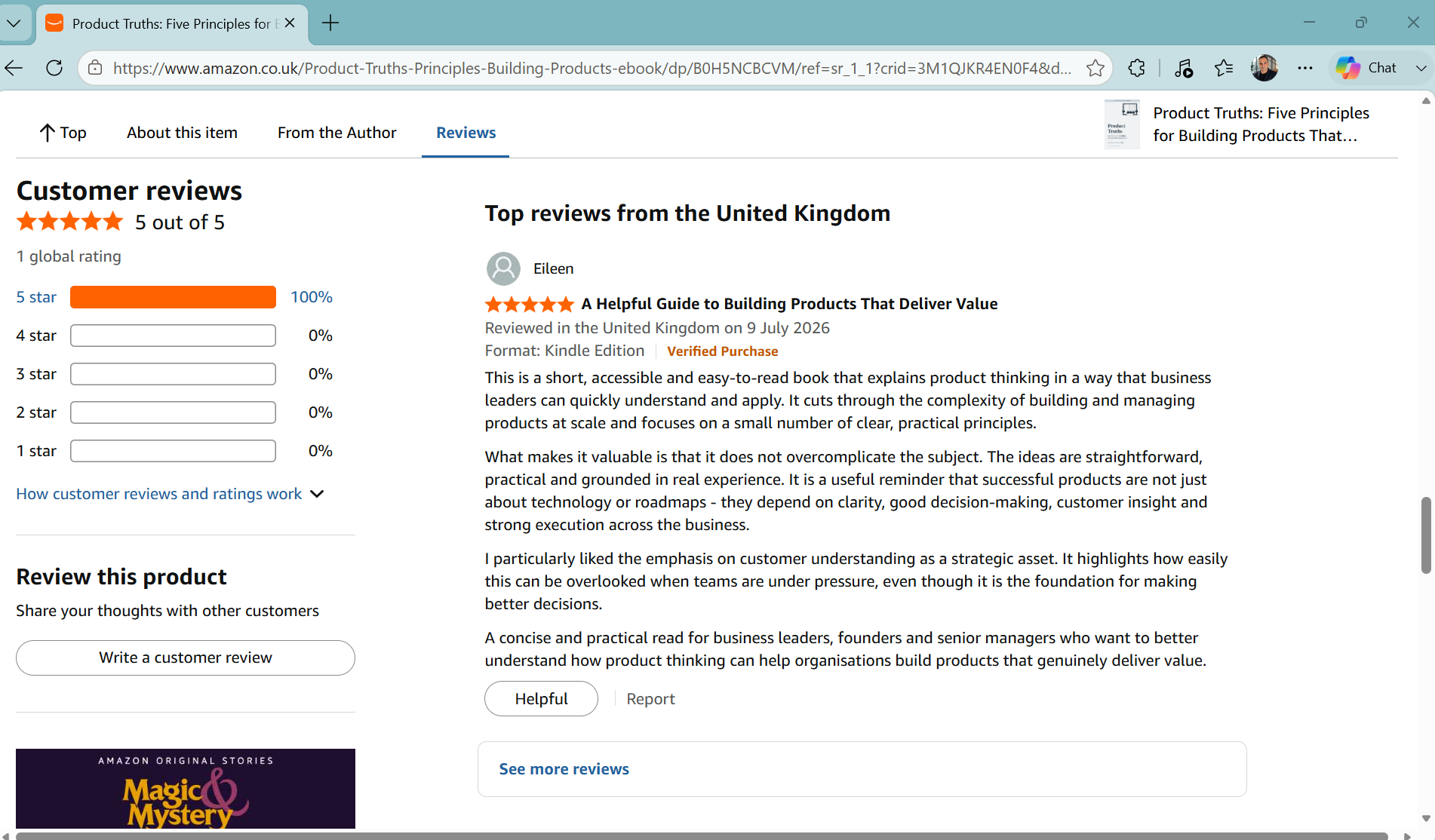
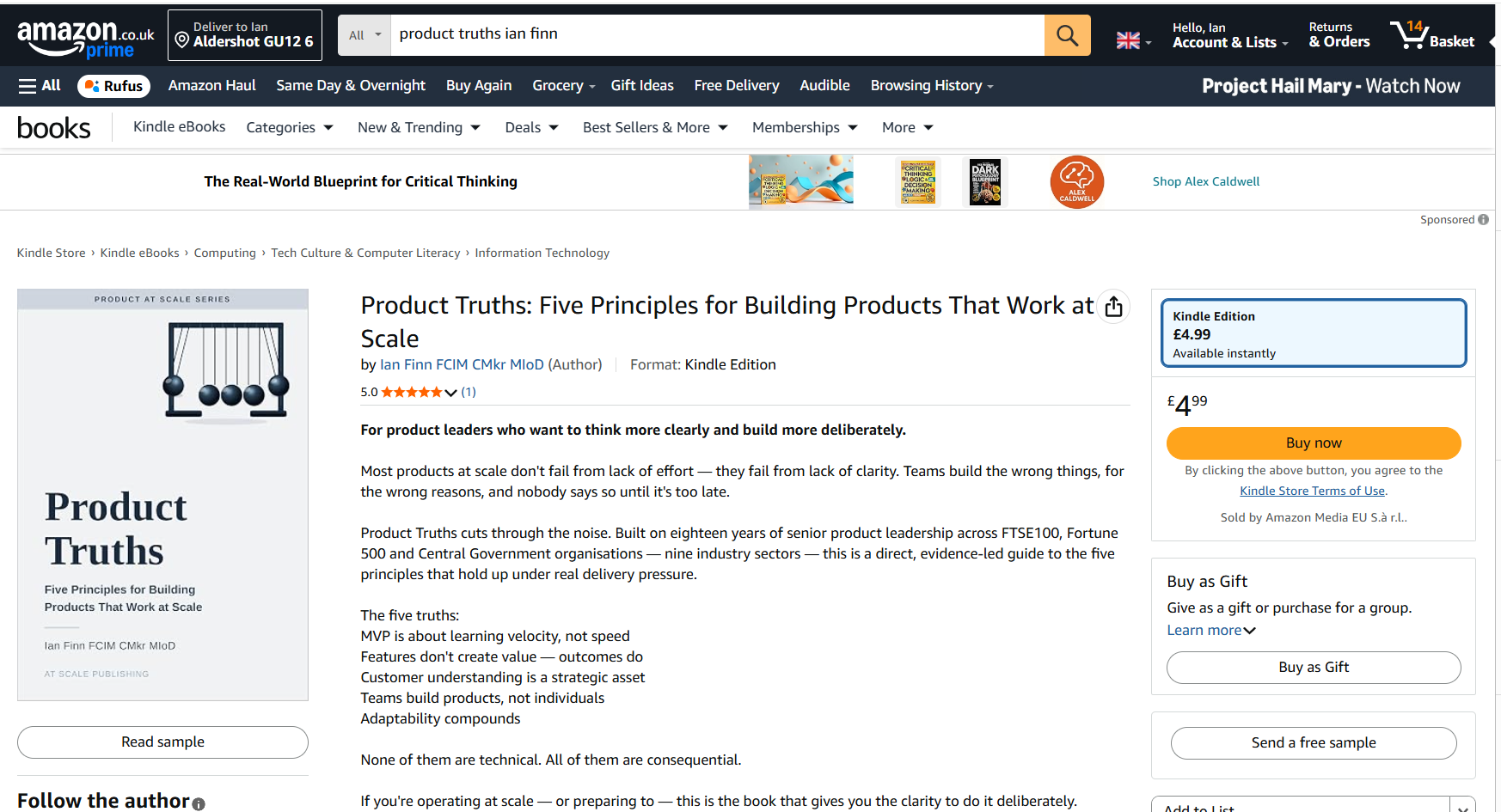
Something small happened this week that mattered more to me than I expected: Product Truths, my first book, got its first review.
Five stars, from a reader who took the time to write something genuinely thoughtful rather than a one-line courtesy note. She called it "accessible and easy-to-read," and picked out something I truly cared about getting right - that customer understanding is a strategic asset, easily overlooked under pressure, even though it's the foundation for better decisions.
There's a particular kind of validation in a stranger reading your work and understanding exactly what you were trying to say. Not because I needed permission to believe the ideas were sound - but because writing them down and putting them into the world is a different kind of exposure than living them out in a career. You don't fully know if it lands until someone tells you it did.
One review doesn't make a book. But it's a good reminder of why I wrote it in the first place - not to add to the noise, but to write the thing I wish someone had handed me earlier in my own career - to help cut through it.
Onwards.
Product Truths: Five Principles for Building Products That Work at Scale eBook : Finn FCIM CMkr MIoD, Ian : Amazon.co.uk: Kindle Store
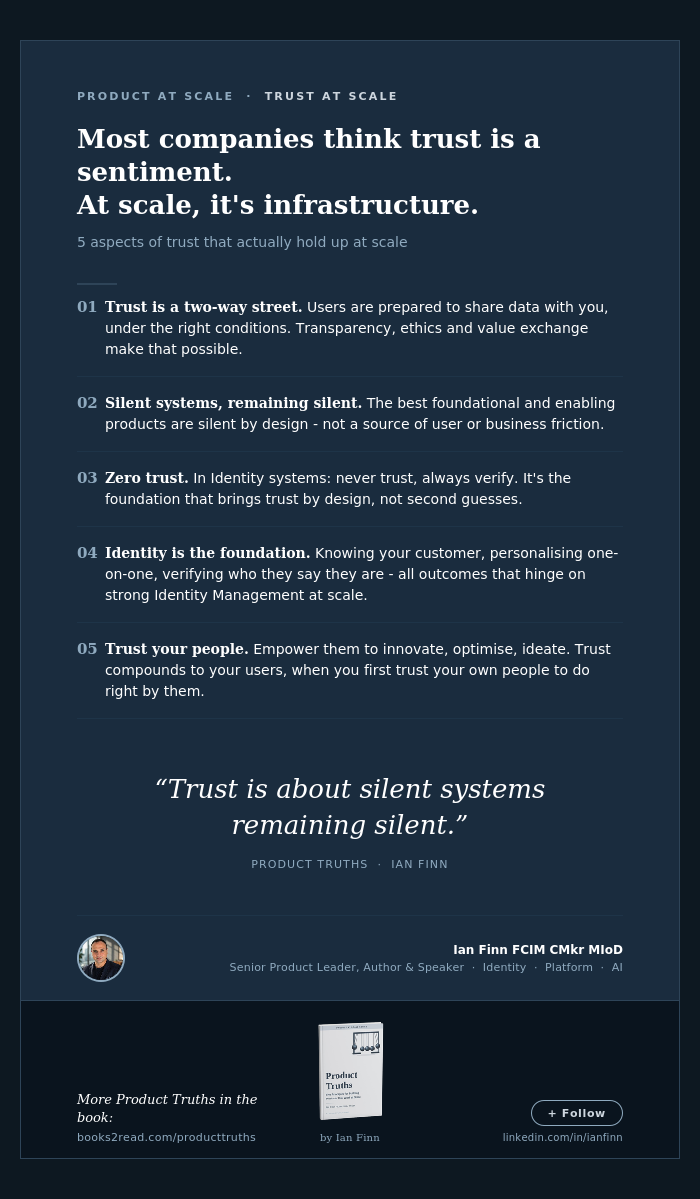
Most companies think trust is a feeling. At scale, it's an architecture decision."
- Ian Finn on Trust & Identity -
After years building enabling platforms serving tens of millions of accounts, here are 5 aspects of trust that actually hold up under real scale
At scale, it's an architecture decision.
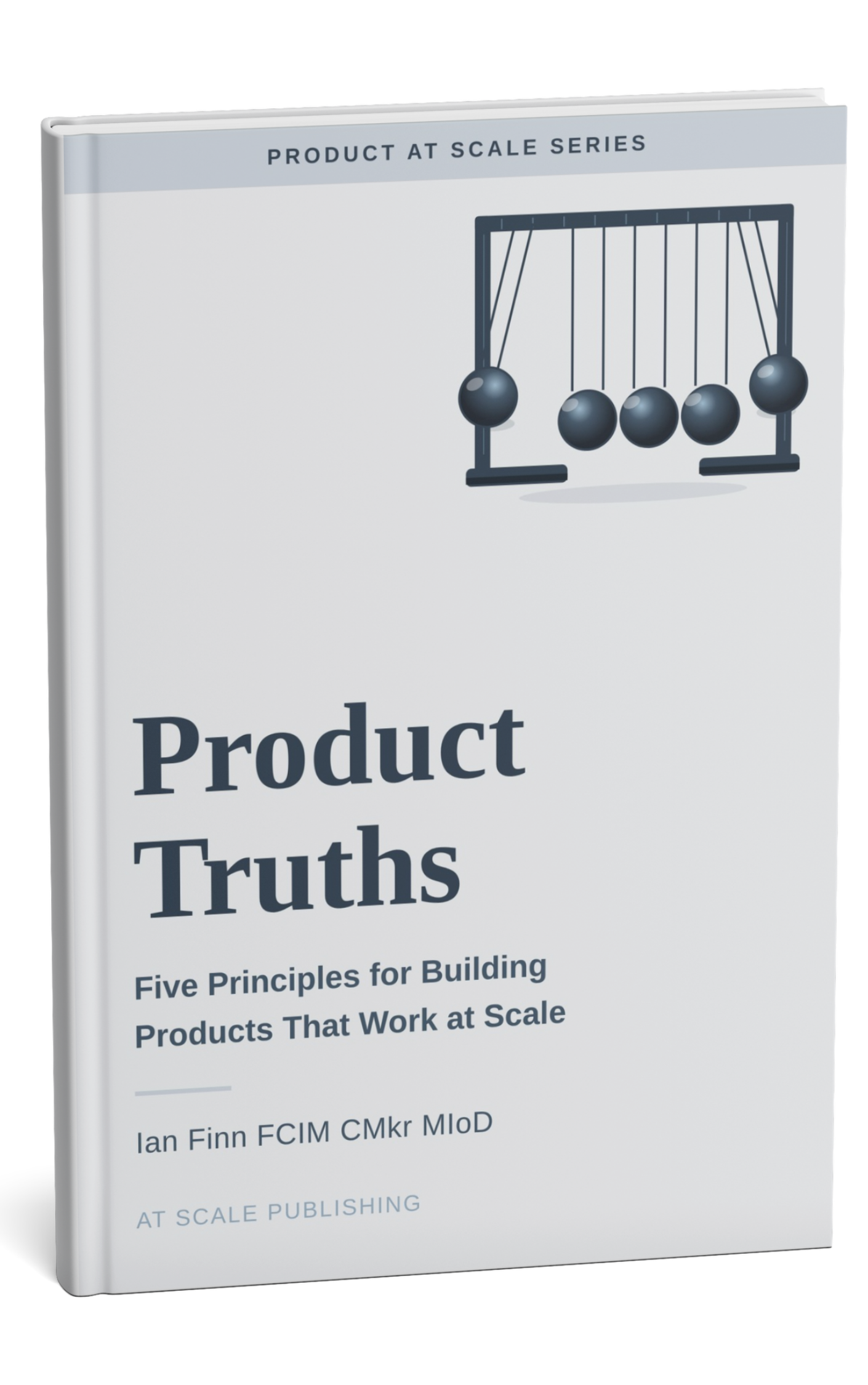
Twenty years. Five principles. One book.
- Ian Finn on Product Leadership -
I'm genuinely excited to share that my first book, 'Product Truths: Five Principles for Building Products That Work at Scale', is now out in the world.
It distils twenty years of product leadership learnings across a range of FTSE 100 companies, three Global 500 organisations, and three UK government departments into five principles for building products that survive contact with real-world complexity — not just the ones that look good in a deck.
Writing it required the same discipline I've used as a practitioner — finding the pattern under the noise, then simplifying until only the essential structure remains. Turning that lens on my own experience has been one of the most satisfying parts of it all.
One of the quotes that opens the book, from Lewis Hatchett, is the one that actually got me to start writing it in the first place:
"Make decisions your 8-year-old self would admire, and your 80-year-old self would be proud of."
It's not a bad test for a product decision either. Finishing this book certainly felt like one of mine.
📖 Available now everywhere — one link here:
https://books2read.com/producttruths
𝐌𝐨𝐬𝐭 𝐨𝐫𝐠𝐬 𝐚𝐫𝐞 𝐆𝐞𝐭𝐭𝐢𝐧𝐠 𝐄𝐱𝐜𝐢𝐭𝐞𝐝 𝐚𝐛𝐨𝐮𝐭 𝐀𝐈. 𝐅𝐚𝐫 𝐟𝐞𝐰𝐞𝐫 𝐚𝐫𝐞 𝐆𝐞𝐭𝐭𝐢𝐧𝐠 𝐆𝐫𝐨𝐮𝐧𝐝𝐞𝐝
- Ian Finn on AI -
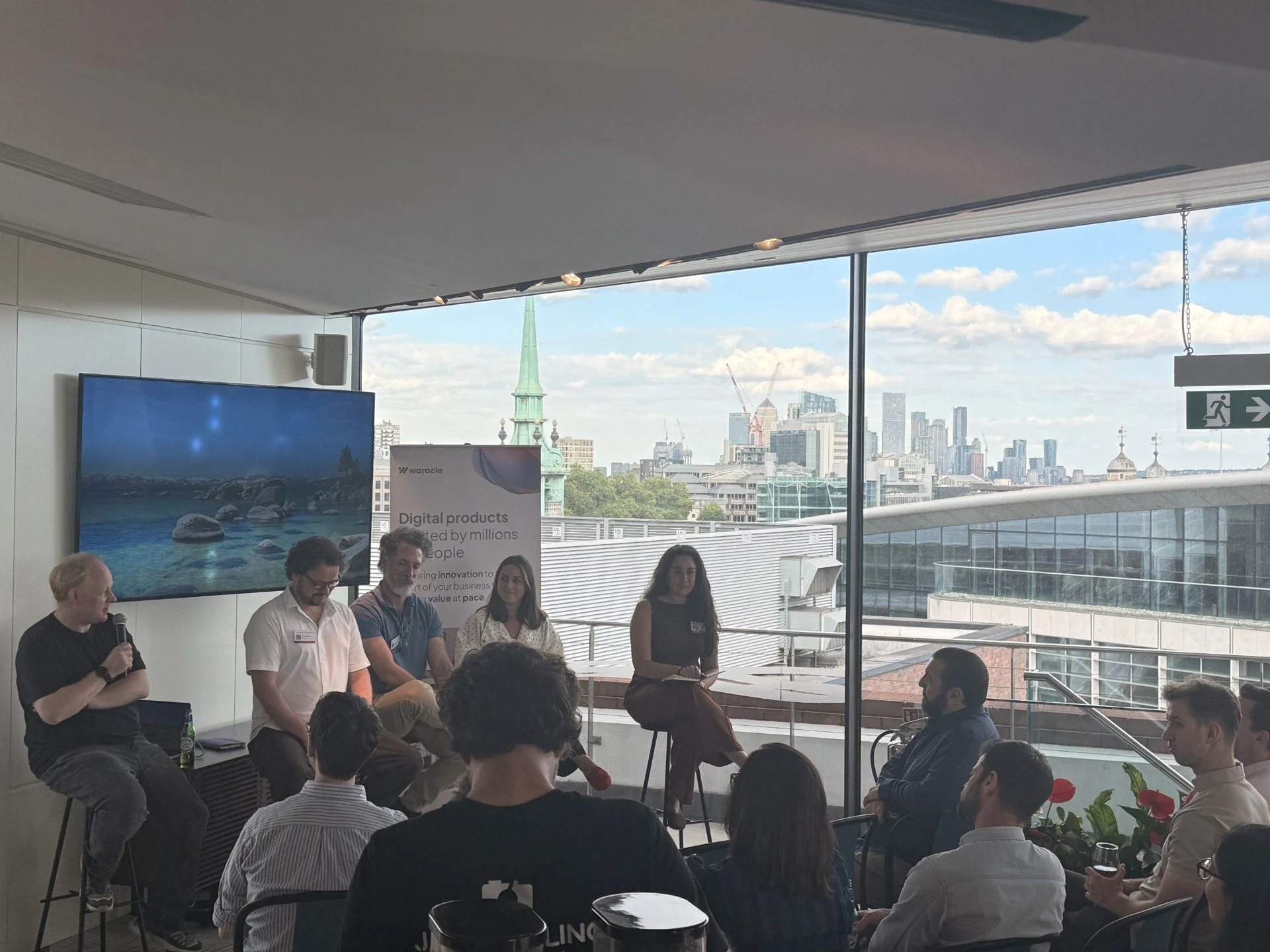
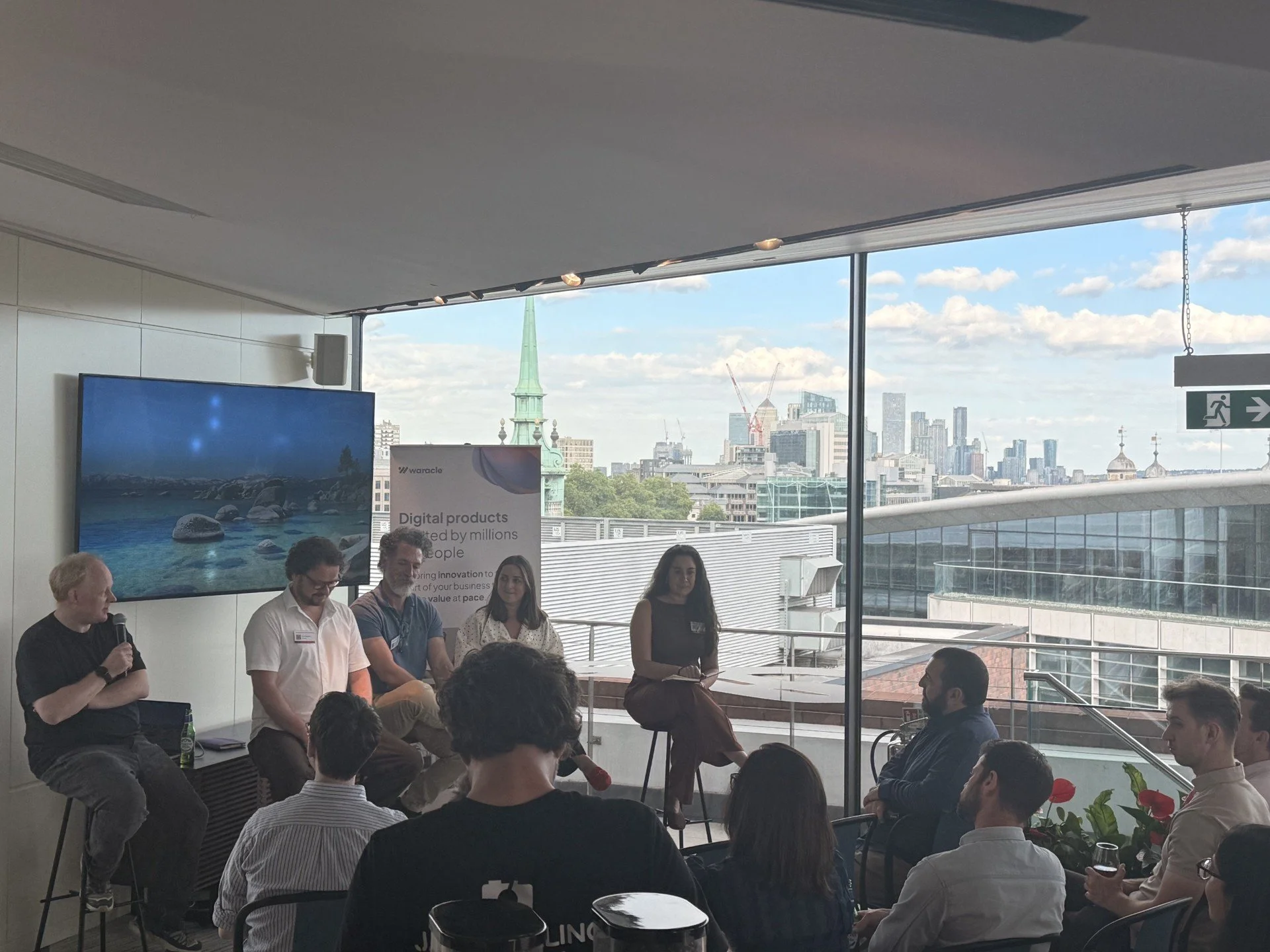
A genuinely thought-provoking evening at the Waracle 'Future Visions AI in SDLC' Panel in London — great to catch up once again with Brian Graham and a strong room of industry peers in an event thoughtfully scheduled to not clash with the key England World Cup game the next day!
The topic: the AI-Enabled SDLC.
𝐓𝐡𝐫𝐞𝐞 𝐭𝐡𝐢𝐧𝐠𝐬 𝐭𝐡𝐚𝐭 𝐬𝐭𝐮𝐜𝐤 𝐰𝐢𝐭𝐡 𝐦𝐞:
𝐓𝐡𝐞 𝐖𝐡𝐚𝐭: The 'Getting Excited → Getting Grounded → Getting Going' framework landed well. Too many organisations let excitement outpace the identification of compelling use cases. Grounding matters.
𝐓𝐡𝐞 𝐖𝐡𝐞𝐫𝐞: Sovereign AI came up — echoing themes from London Tech Week. With significant data stewarded in overseas domains, unfavourable trade deals or tariffs could start affecting AI-enabled organisations in ways few are planning for yet.
𝐓𝐡𝐞 𝐖𝐡𝐨: People remain central — not just product and process. Research suggests the optimum human-AI blend tends to be younger, more senior humans paired with agents. My contribution to the room: don't forget the human in it all, as a key mantra in both adoption and embedding.
Token spend approaching Cloud-level costs in some organisations makes the governance and value questions more pressing than ever now.
A fabulous evening of lively debate and stimulating discussion — with the most pleasing of London skylines as the backdrop. Thanks to the entire Waracle team for your wonderful hosting.
#AIStrategy #ProductLeadership #SDLC #SovereignAI #FutureOfWork


Forget the frameworks for a second.
- Ian Finn on Product Leadership -
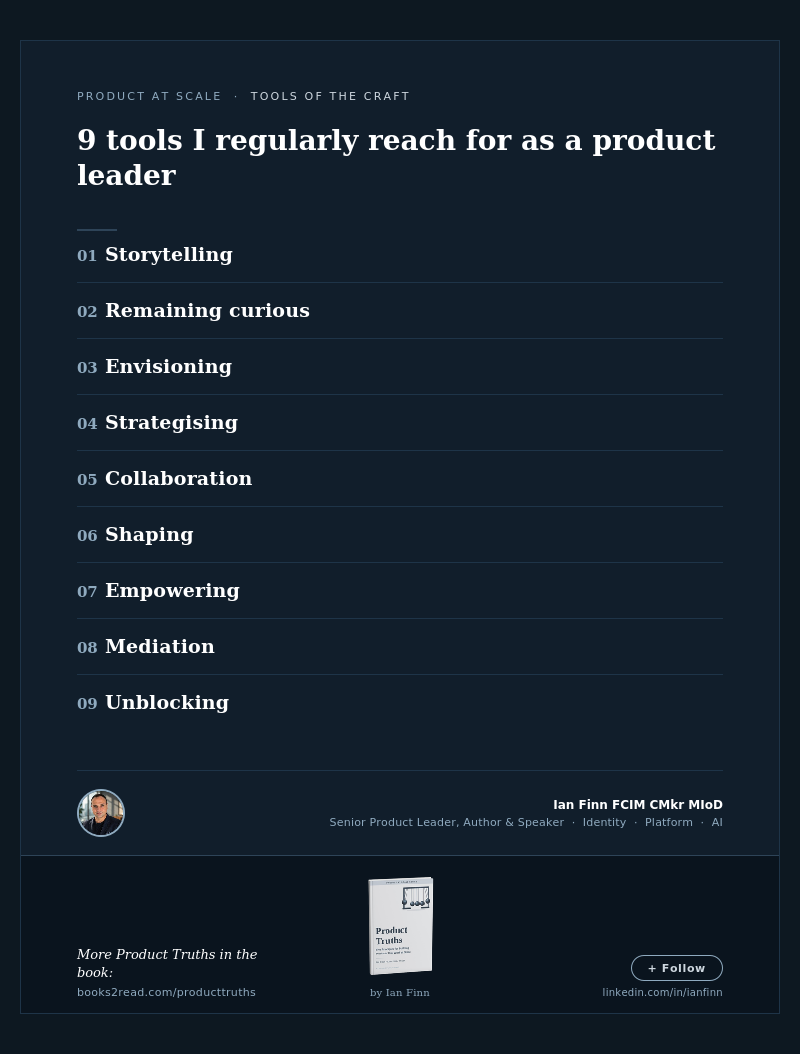
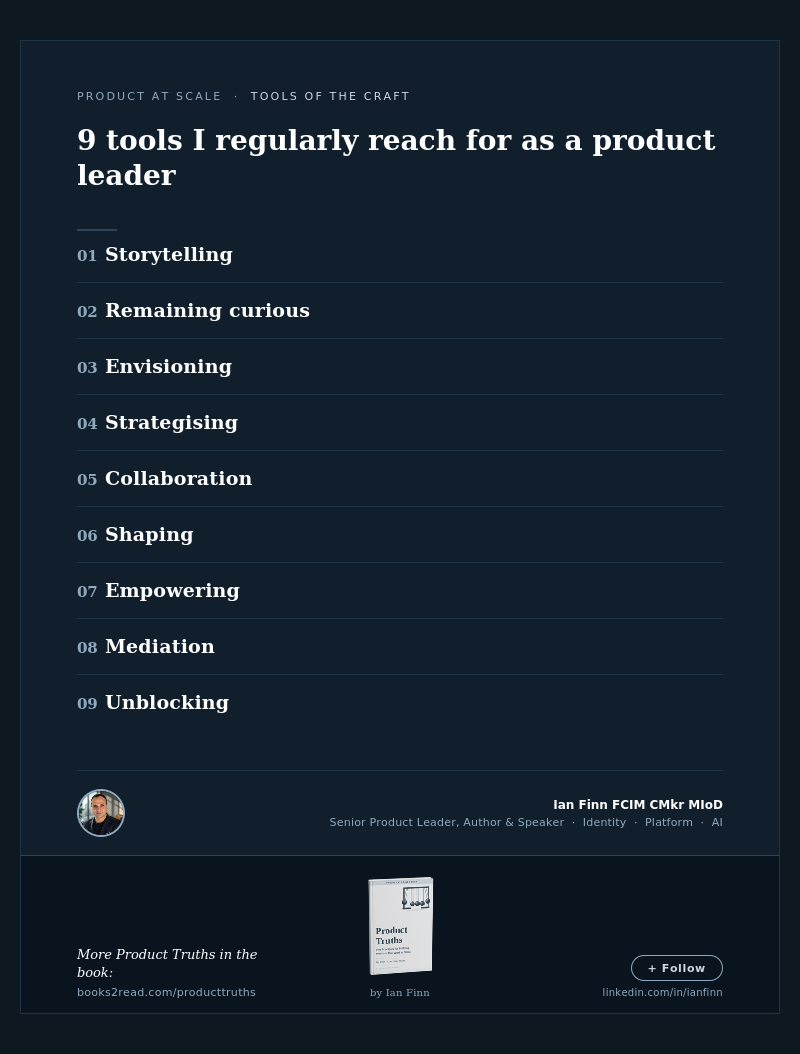
After 18 years leading product at scale — across identity, platforms, and personalisation — these are the 9 things I actually reach for, day to day, before any methodology gets involved:
01. Storytelling
02. Remaining curious
03. Envisioning
04. Strategising
05. Collaboration
06. Shaping
07. Empowering
08.Mediation
09. Unblocking
None of these show up on a certification. All of them show up in the work.
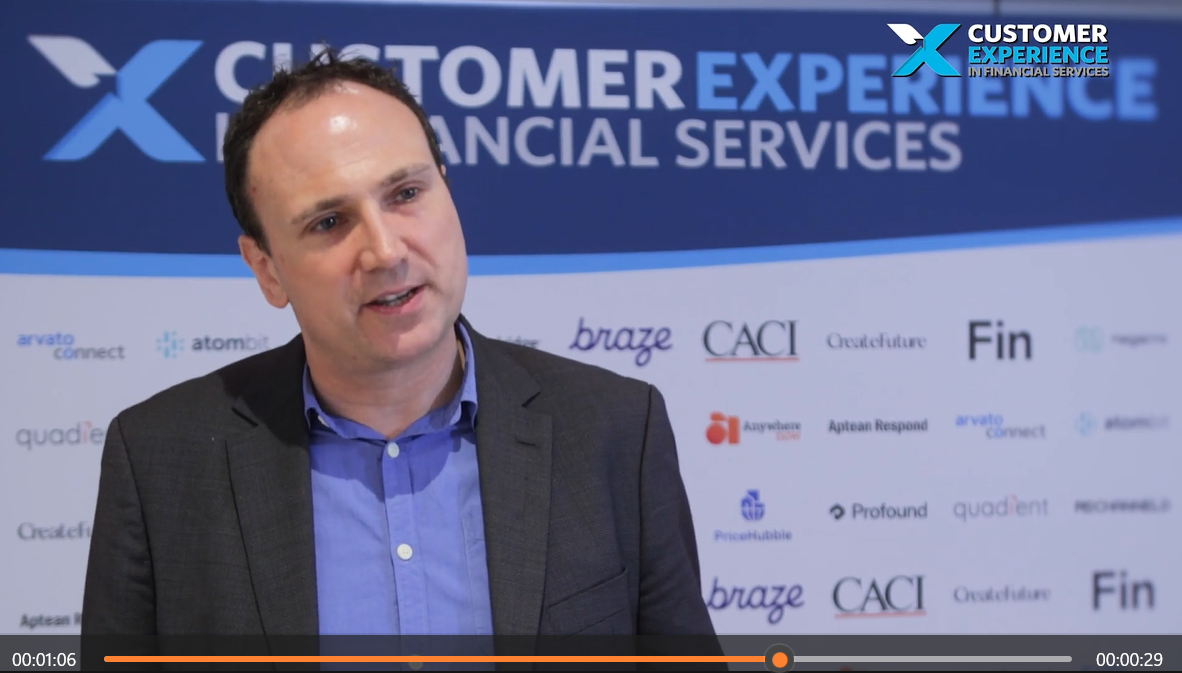
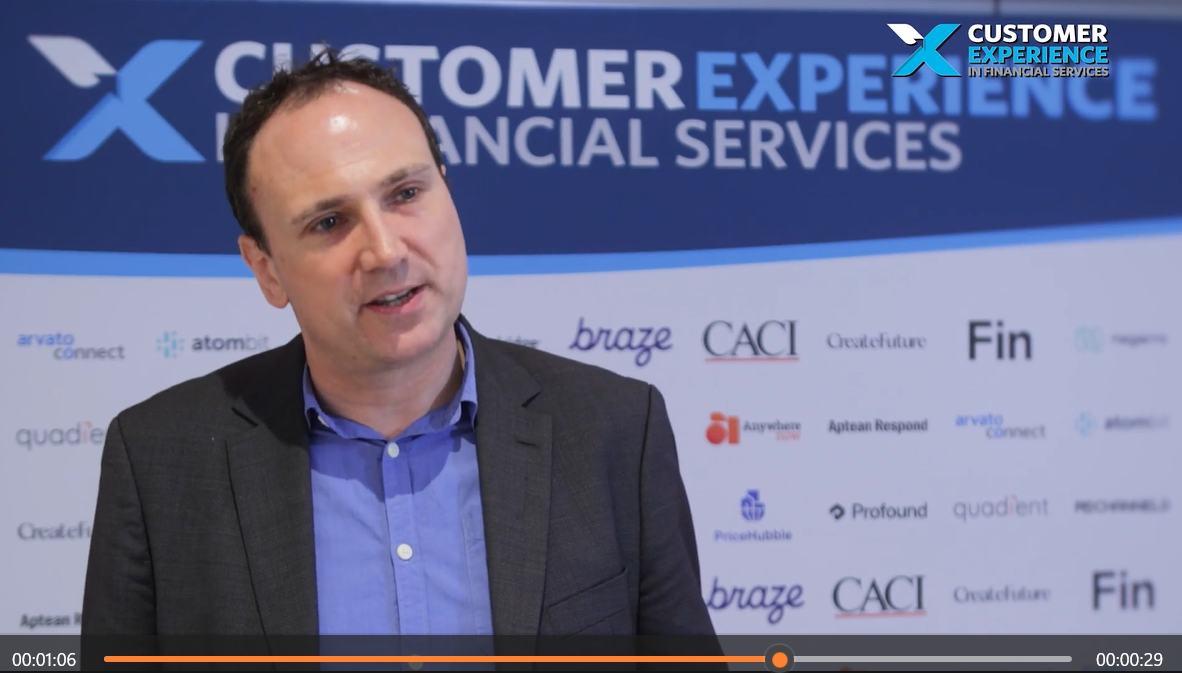
Identity at Scale: Simplicity as the Real Differentiator CXFS26 — Customer Experience in Financial Services, London, 17–18 June 2026
What I Spoke About
At CXFS26 I made the case that identity at scale isn't won through complexity, it's won by stripping it away. Less is more: reducing cognitive load, building familiarity consistently across every channel, and harmonising the systems sitting behind them so the customer never feels the seams. I also explored how "save to invest" and customer experience itself are becoming genuine points of differentiation, not just operational hygiene.
What I Said Afterwards
In the interview that followed, three themes carried through. First, personalisation at scale isn't about boiling the ocean — it's about identifying the two or three data points that actually drive tailored experiences, and ignoring the rest. Second, identity at scale is won through interactions that are secure but effortless, and that remain trustworthy at every touchpoint. Third, AI belongs in the kit as one tool among many — most valuable where its distinct strengths serve use cases that were genuinely underserved before, not as a blanket solution applied everywhere.
[Watch the full interview here →]
https://www.youtube.com/watch?v=H0T3s8hSkwc
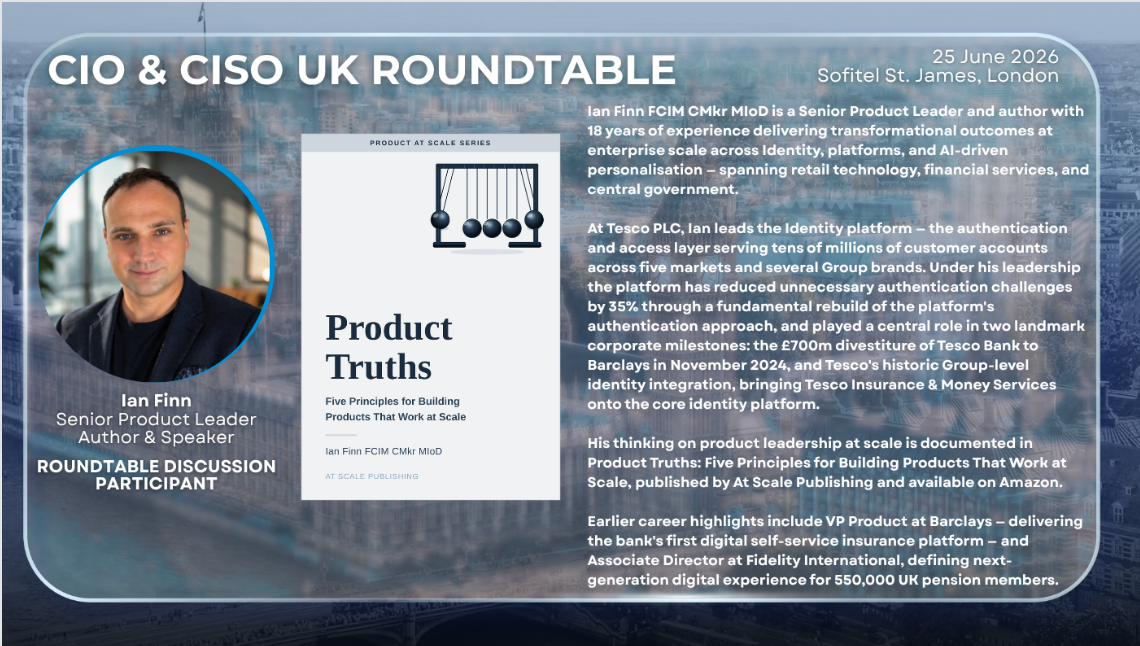
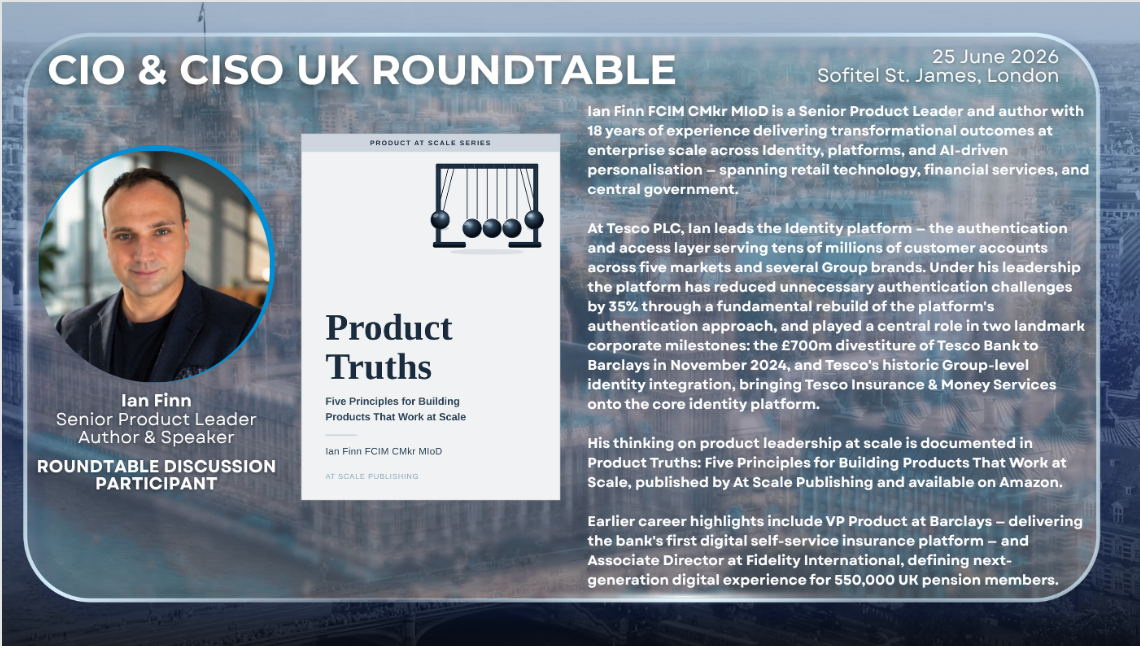
Panelist at CIO & CISO RoundTable, 25.06.26
I’ll be a panelist discussing digital trust and the new risk landscape at the CIO & CISO UK Roundtable in London on 25 June — and delegates will each get a copy of my recently published book Product Truths on the day.
Full details on the site:
https://infoteaminternational.co.uk/events/cio-ciso-uk-roundtable/
I’ll be a panelist discussing digital trust and the new risk landscape at the CIO & CISO UK Roundtable in London on 25 June — and delegates will each get a copy of my recently published book Product Truths on the day.
Full details on the site:
https://infoteaminternational.co.uk/events/cio-ciso-uk-roundtable/
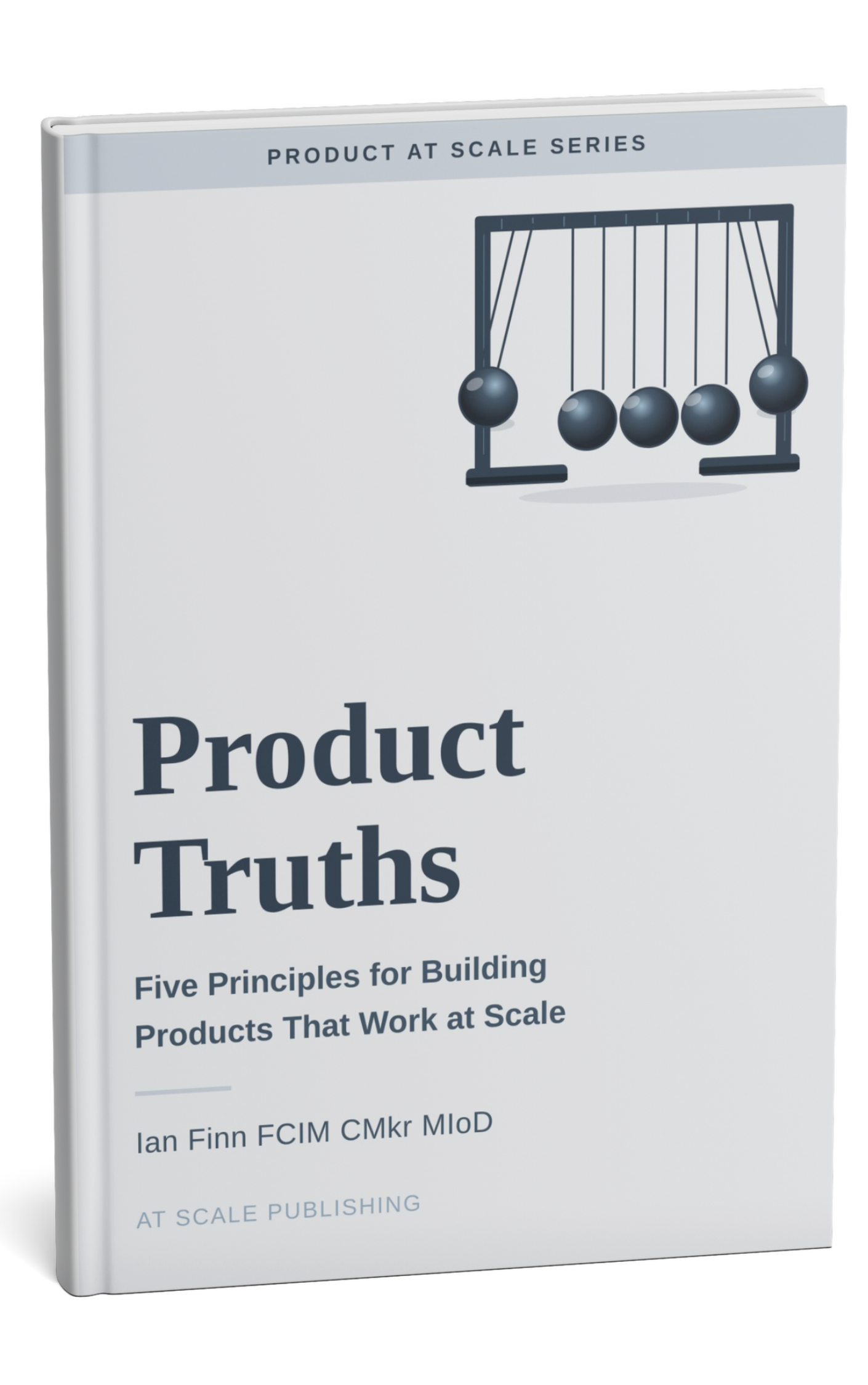
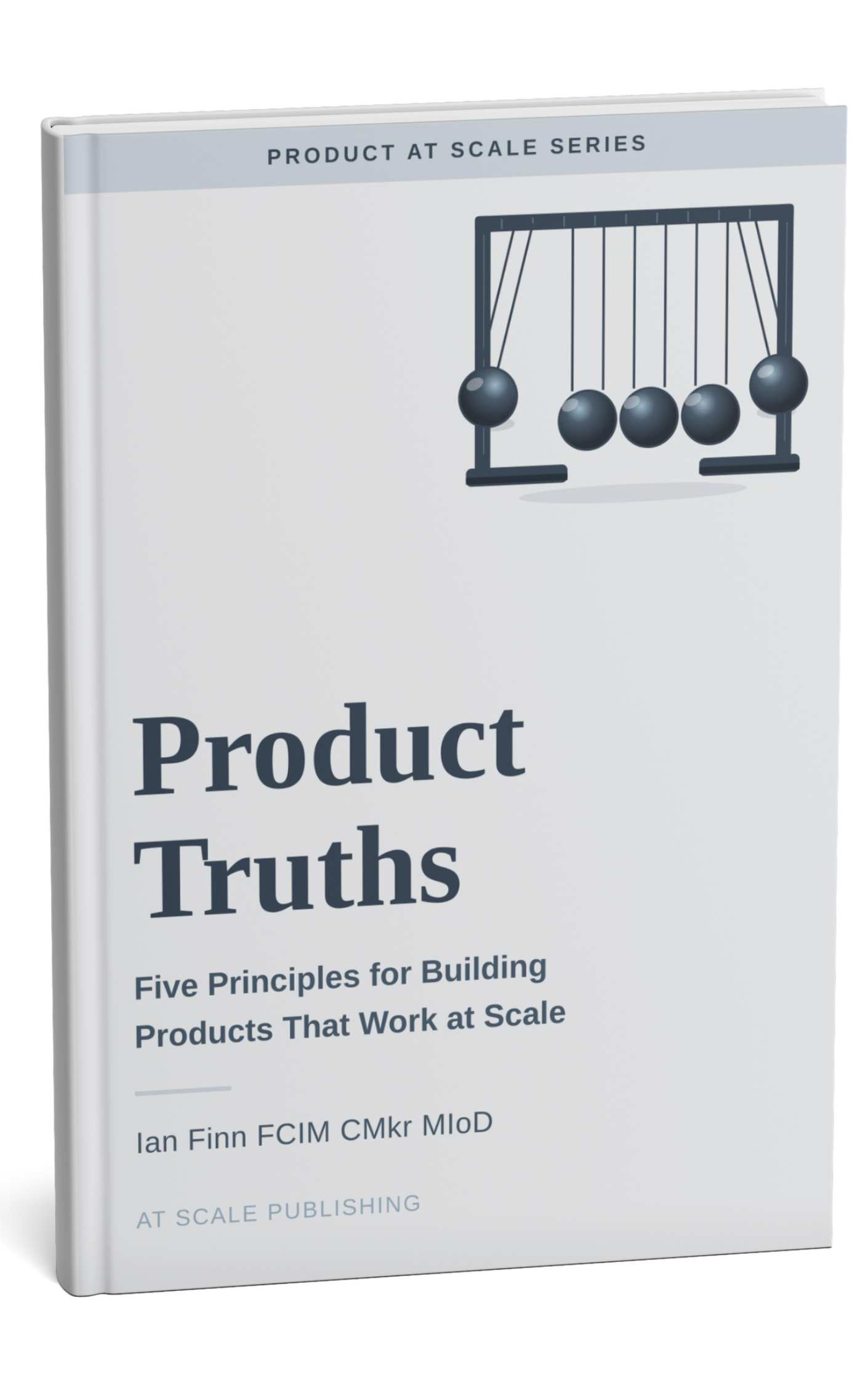
Announcement… ‘Product Truths: Five Principles for Building Products That Work at Scale’ — published today
Eighteen years. Nine industry sectors. Millions of users. Five truths that kept surfacing, regardless of sector, organisation or scale.
Today, those truths are published.
Product Truths: Five Principles for Building Products That Work at Scale is the book I wished existed when I was navigating the gap between good product thinking and what it actually takes to deliver at enterprise scale — under pressure, with real consequences, across organisations that don't always pull in the same direction.
It's built around five principles that hold up when the stakes are high and the complexity is real. None of them are technical. All of them are consequential.
The infrastructure that makes great products possible is usually invisible. The outcomes aren't. That's been the thread running through everything I've built — and it's the thread running through this book.
It's available on Amazon at £4.99 via At Scale Publishing. But it’s free to Product at Scale subscribers.
Read it free here → productatscale.substack.com/p/your-free-copy-of-product-truths
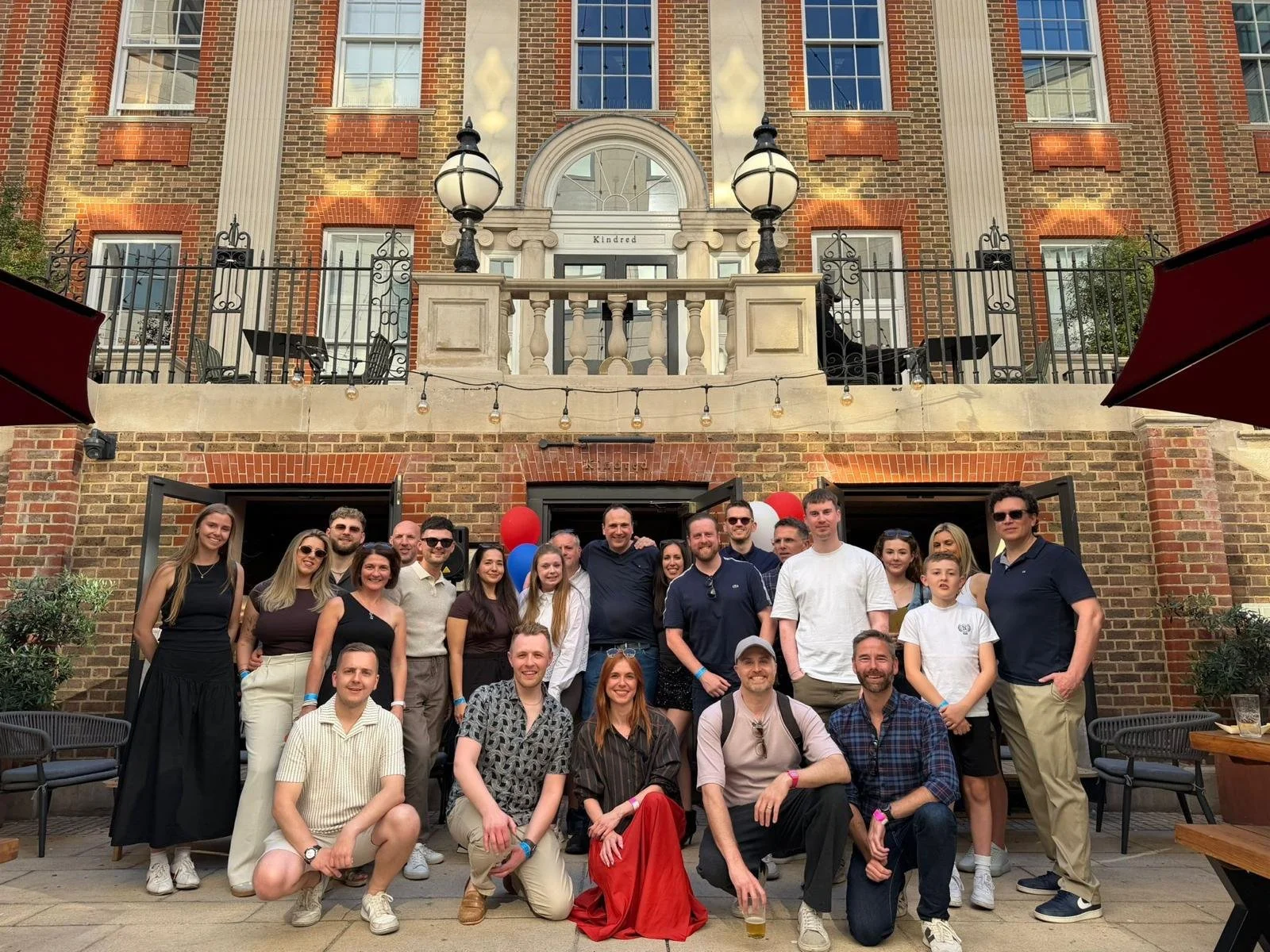
Britain's Got Talent — The Team Behind the Magic
Ian Finn on leading technology delivery for Clubcard voting at Britain's Got Talent — real-time infrastructure at live TV scale across six engineering teams.
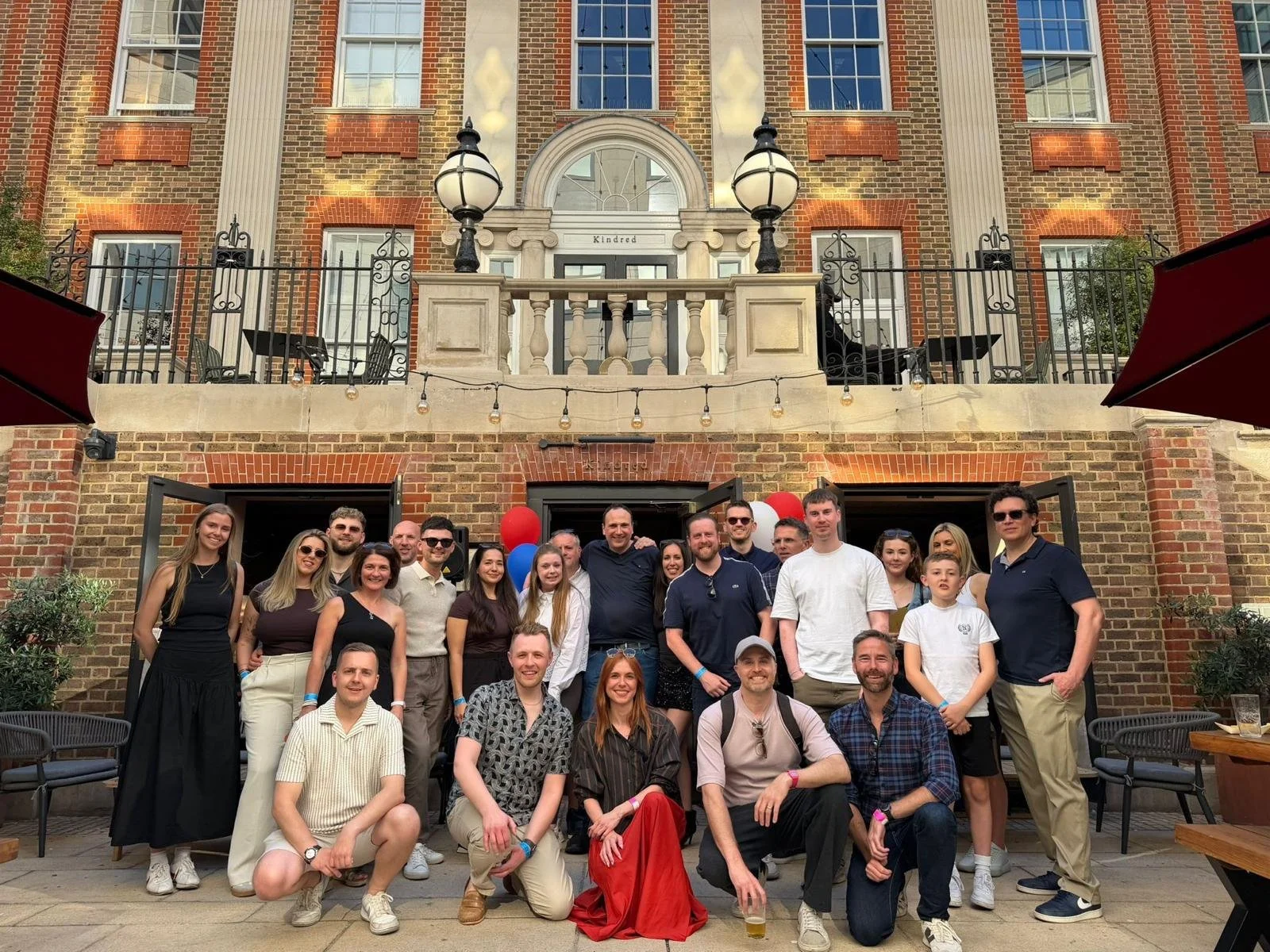
Ian Finn with the Britain's Got Talent delivery team at the series final — live TV technology partnership
Clubcard voting at live TV scale. Millions of data points. Millions of points awarded. Real-time, every broadcast, across five weeks.
This is the team that made it happen — pictured at the Britain's Got Talent series final. A genuine partnership across technology, broadcast and entertainment, delivering something at a scale and reliability that live television demands.
Leading for technology across six engineering teams, I worked alongside brilliant people to deliver a partnership that reached an average 4.6 million viewers per broadcast — putting real-time technology at the heart of one of the UK's most watched live entertainment formats.
The infrastructure was invisible. The outcome wasn't.
That's the thing about technology at scale: when it works, no one sees it. The voting just happens. The points just land. The experience just flows. And behind that seamlessness sits an enormous amount of engineering, coordination and trust — across organisations, under live pressure, with no second takes.
The best technology is the kind audiences never notice. They just enjoy the moment
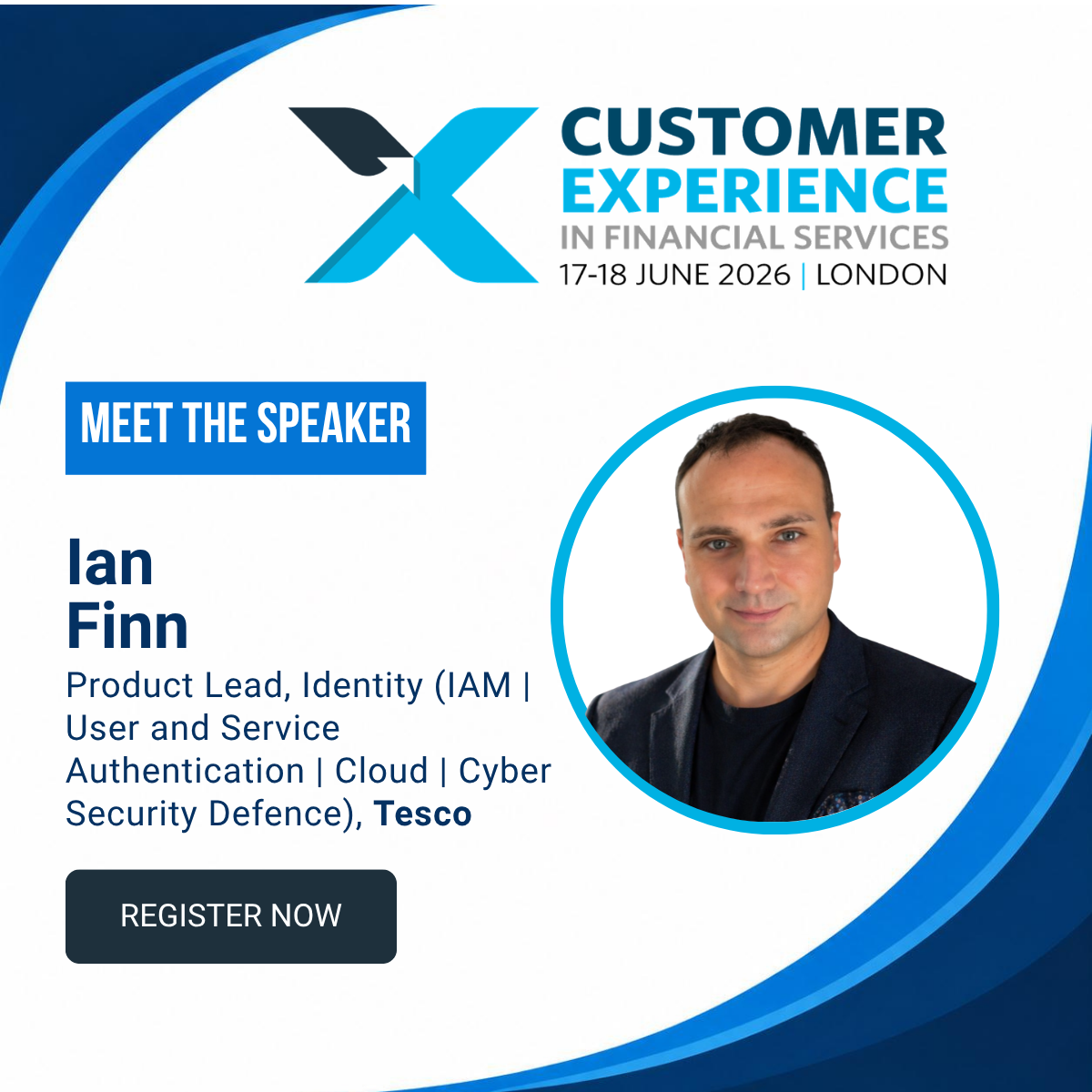
Speaking at Customer Experience in Financial Services 2026 — Ian Finn
Speaking at Customer Experience in Financial Services 2026 on Identity as an engine of growth.
Speaking on trust, identity and invisible infrastructure in financial services — and an open invitation to connect if you're there. London, 17-18 June 2026.
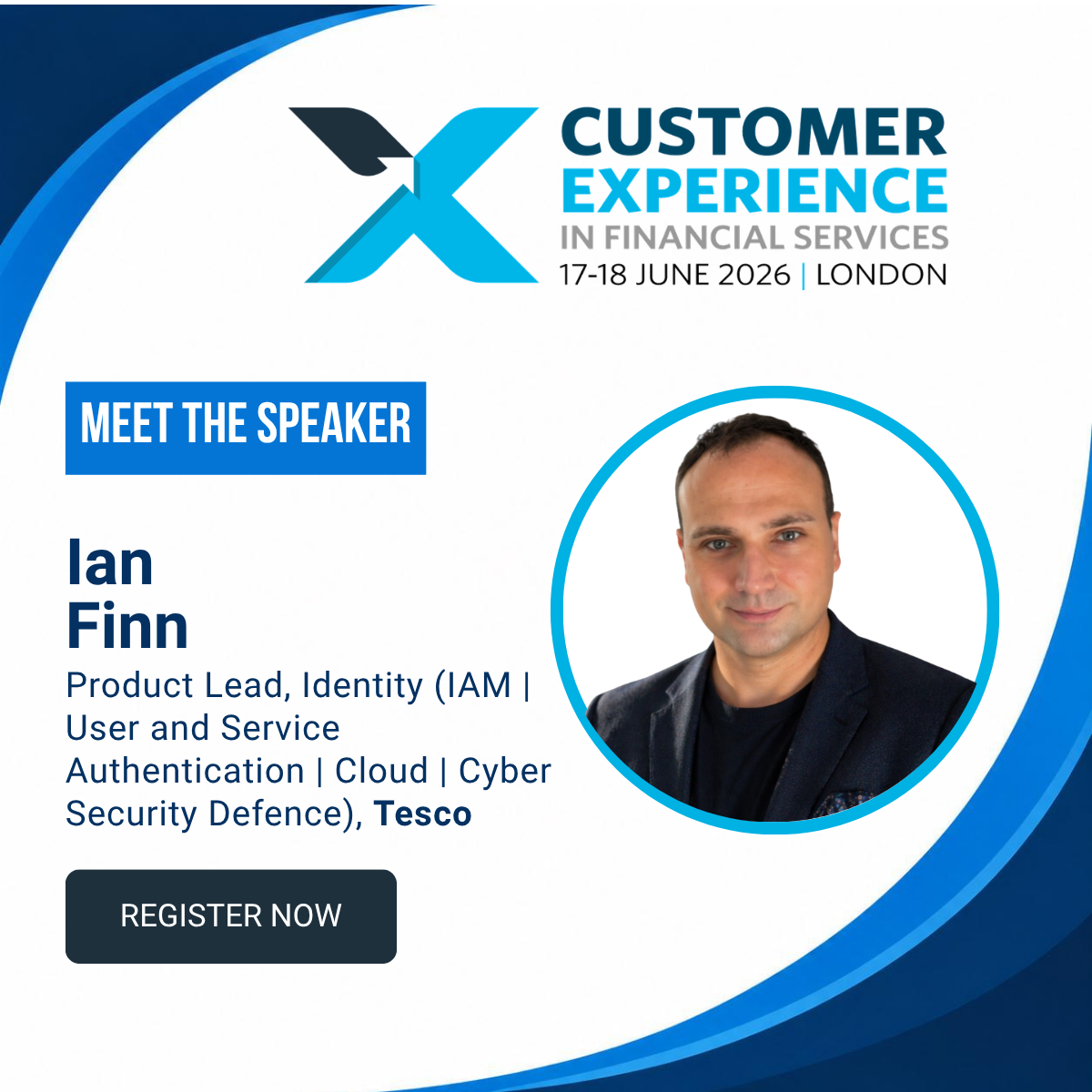
Ian Finn, speaker at Customer Experience in Financial Services 2026, London, 17-18 June — digital identity and IAM
I'm pleased to be speaking at Customer Experience in Financial Services 2026, in London on 17-18 June.
My session looks at digital identity as a strategic lever — not just a security control, but the foundation of consumer trust and the invisible infrastructure behind every seamless customer journey. In financial services especially, the way an organisation handles authentication, trust and access shapes the entire customer relationship, often before the customer is even aware of it.
I'll be drawing on lived experience building and scaling identity platforms in high-trust, high-volume environments — where reliability is non-negotiable and the cost of friction is measured in millions of interactions.
If you're attending, I'd welcome the conversation — whether on identity, platform strategy, AI adoption, or the broader question of how financial services organisations earn and keep customer trust in an increasingly digital world.